South Korea and Uzbekistan Forge Deeper Economic Ties at Landmark Tashkent Business Forum
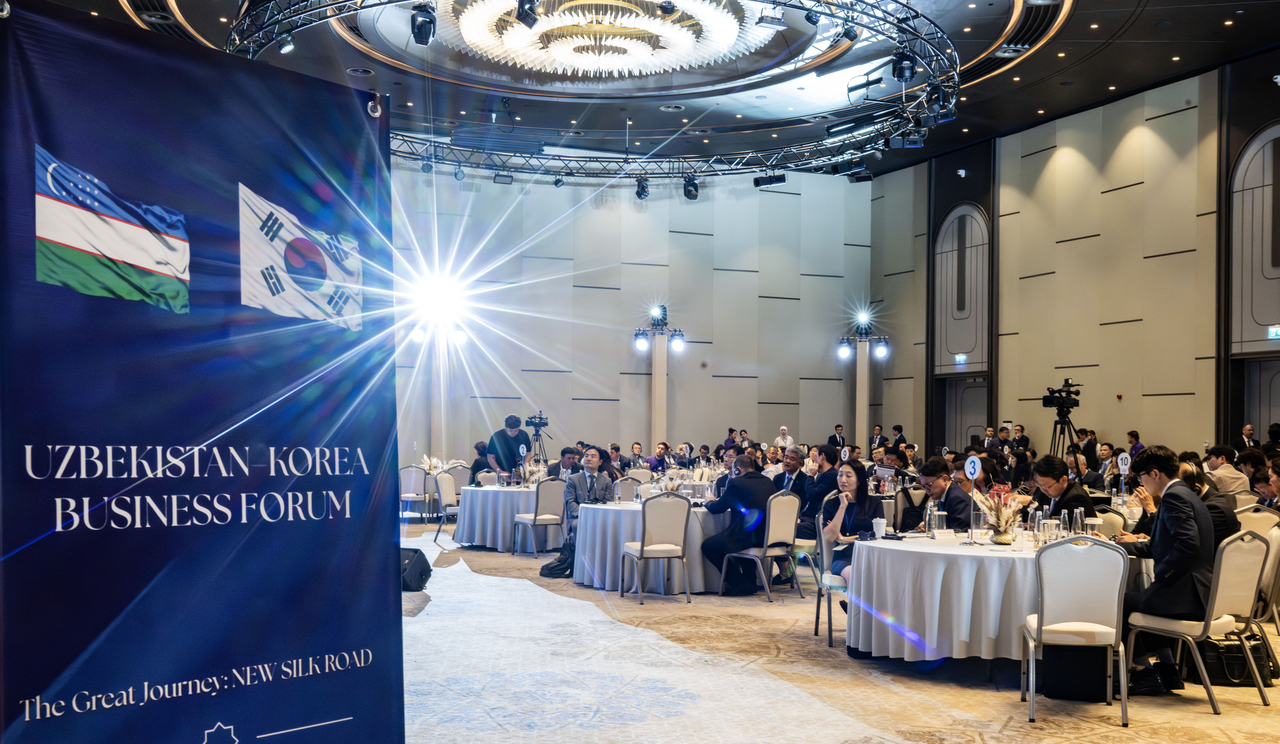
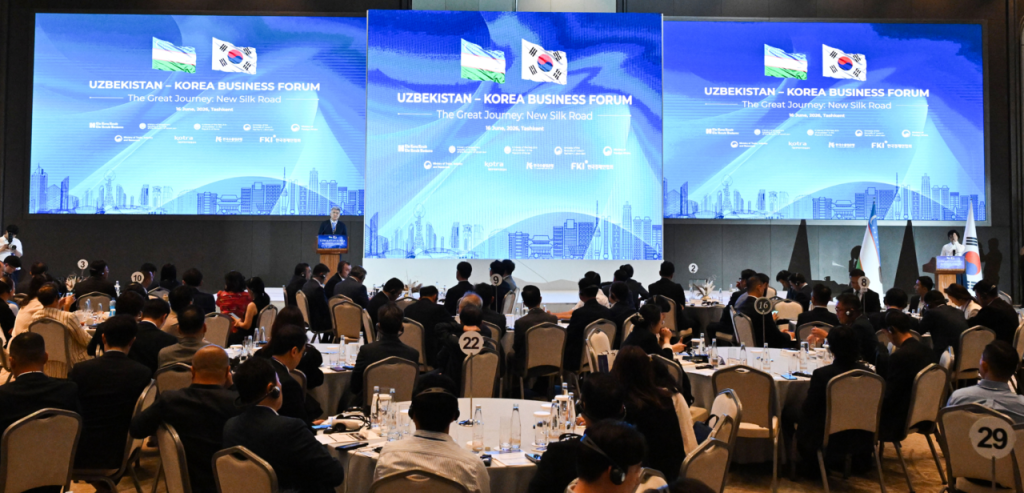
TASHKENT, Uzbekistan — South Korea and Uzbekistan are significantly expanding their economic partnership, moving beyond traditional infrastructure projects to embrace new avenues of cooperation. This strategic shift was highlighted at a major business forum held last week in Tashkent, drawing approximately 500 government officials, lawmakers, and prominent business leaders from both nations.
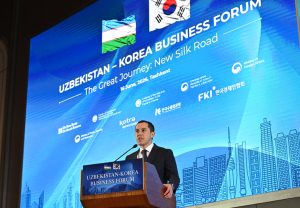
The Korea-Uzbekistan Business Forum, a pivotal event for bilateral relations, was jointly organized by the Herald Media Group (publisher of The Korea Herald and The Herald Business) and Uzbekistan’s Ministry of Investment, Industry and Trade. Held on Tuesday, the forum aimed to broaden cooperation across vital sectors including transport, logistics, advanced digital technology, renewable energy, and cultural exchange.
This influential forum also served as a crucial precursor to the inaugural Korea-Central Asia Summit scheduled for Seoul in September. Furthermore, it was recognized as an affiliated event of the Tashkent International Investment Forum, Central Asia’s premier gathering for investment and business.
South Korean President Lee Jae Myung delivered a significant congratulatory message, noting that the forum convened during a period of profound global uncertainty, characterized by evolving geopolitical risks and a re-shaping of global supply chains.
“At a time when resource security is directly tied to a nation’s future, South Korea, with its advanced technology, and Uzbekistan, with its abundant energy resources, can turn crisis into opportunity and help both countries take another leap forward,” President Lee stated in the message, which was read on his behalf by Herald Media Group President and CEO Choi Jin-young.
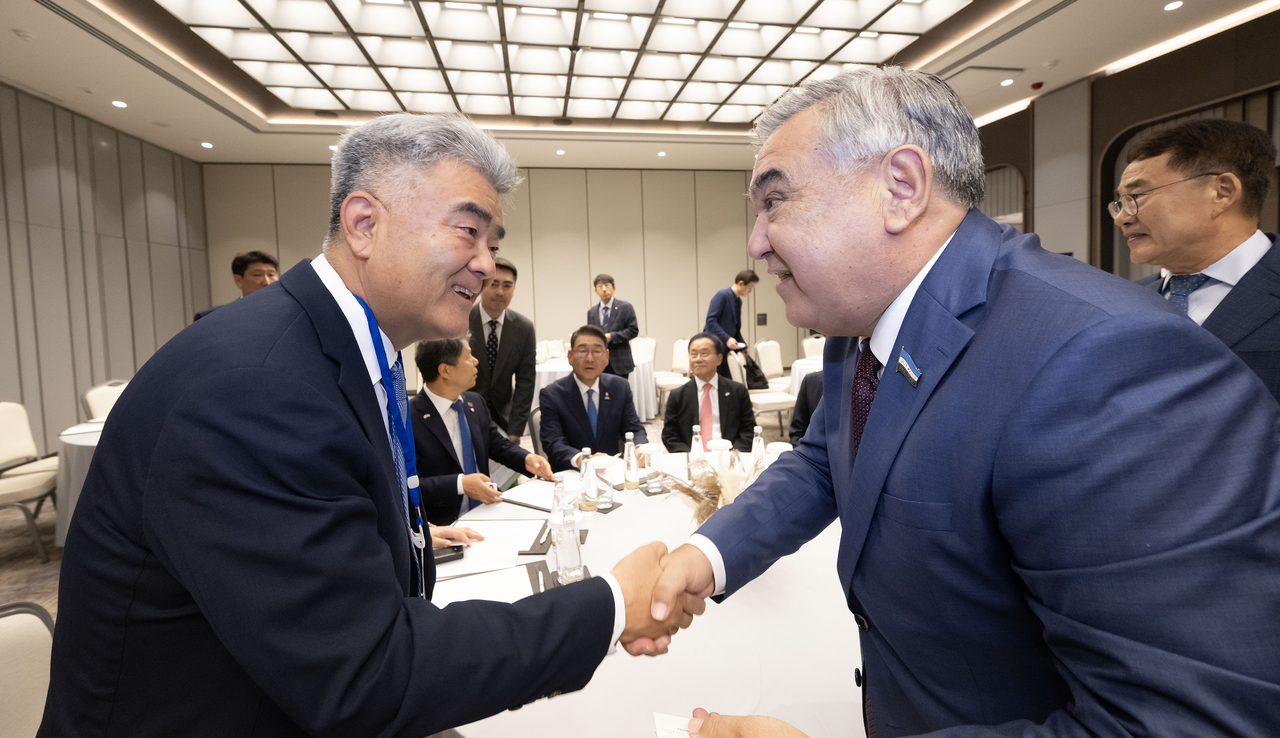
Officially opening the forum, Jung Won-ju, who chairs Herald Media Group, Jungheung Group, and Daewoo Engineering & Construction, emphasized the profound depth of Korea-Uzbekistan bilateral ties. He highlighted Uzbekistan’s unique position as the sole Central Asian nation with which South Korea shares a special strategic partnership.
“There is a profound Uzbek saying that a tree lives by its roots and a person lives by friends,” Jung remarked. “Korea’s enduring ties with Uzbekistan, alongside Daewoo’s extensive history in the nation, are a testament to years of accumulated trust and genuine friendship, not something built overnight.”
Jung further underscored Uzbekistan’s remarkable economic transformation, asserting that the nation’s considerable growth potential presents opportunities too significant for Korean companies to disregard.
“I once heard that Uzbekistan has accomplished in merely eight years what might typically require 80 years. I truly believe that to be accurate,” Jung stated. “Considering such phenomenal growth potential, a failure to actively invest in Uzbekistan would undoubtedly represent a significant missed opportunity for the Korean economy.”
Identifying infrastructure development, advanced logistics, cutting-edge data centers, and AI-related industries as particularly promising sectors for future bilateral cooperation, Jung suggested that South Korea’s expertise in airport-centered urban development could provide an invaluable blueprint for Uzbekistan’s next phase of growth.
“Imagine a new city where data centers, efficient logistics facilities, and AI-powered semiconductor-related factories are integrated; Uzbekistan’s economic opportunities in such a scenario would be truly limitless,” he envisioned.
Alisher Agzamkhodjaev, Chairman of the Senate Committee of the Oliy Majlis on International Relations, Foreign Economic Relations, Foreign Investments, and Tourism, urged Korean companies to significantly enhance their investment in Uzbekistan, specifically highlighting mineral resource development, data centers, and sophisticated logistics complexes as key areas.
“This forum is poised to serve as a critically important platform for fostering and developing new collaborative projects between our two nations,” he affirmed.
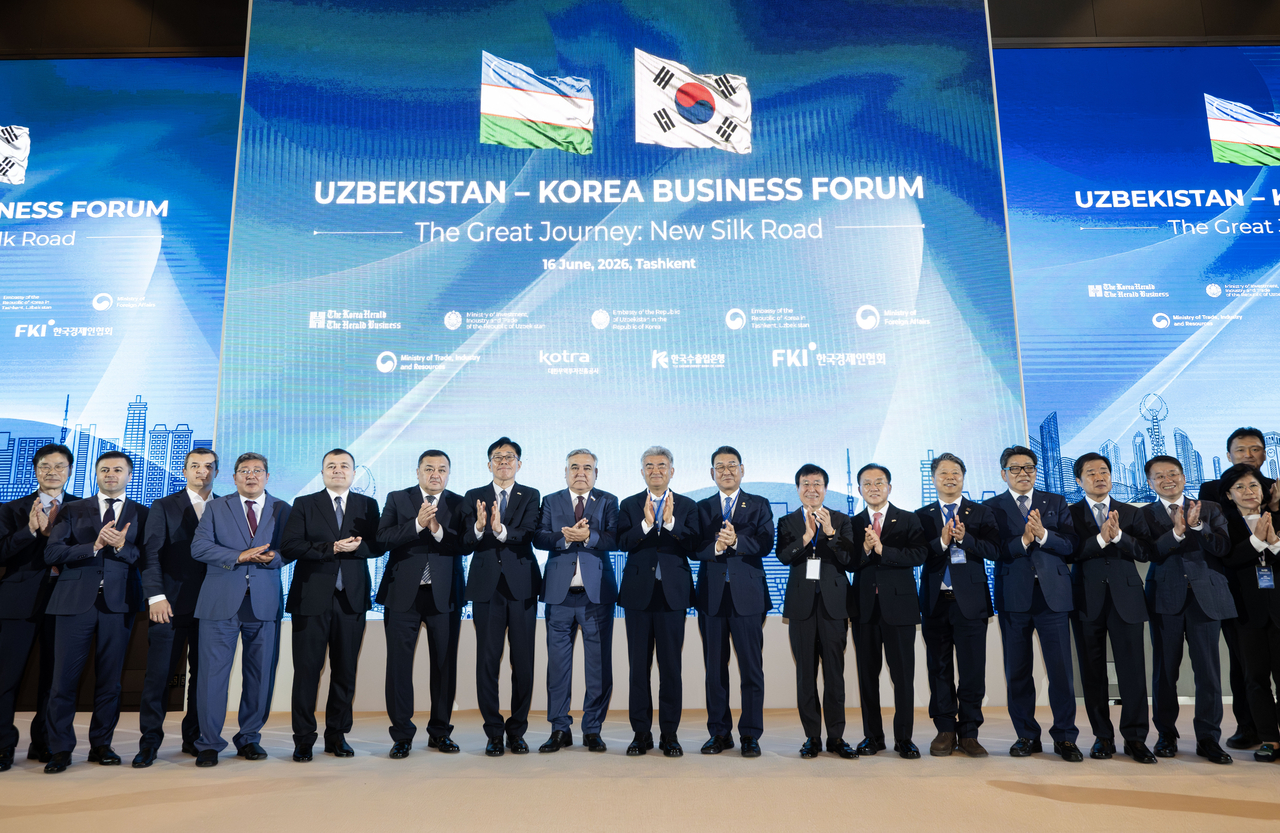
A recurring and central theme throughout the forum was robust infrastructure development. Uzbekistan is actively advancing significant development projects, including expansions at its main airport, the establishment of a cutting-edge bio cluster, and the creation of a hub smart city, all of which see substantial involvement from Korean companies, financial institutions, and airport authorities.
South Korea currently stands as Uzbekistan’s fifth-largest trading partner, following China, Russia, Kazakhstan, and Turkey. Collectively, these top five partners contribute approximately 65 percent of Uzbekistan’s total trade volume.
Attendees at the forum also engaged in discussions on proactive strategies to mitigate global supply chain risks, particularly through collaborative projects focused on developing robust clusters for critical minerals like tungsten and molybdenum.
Ural Yusupov, Deputy Minister of Mining and Geology of Uzbekistan, advocated for both nations to jointly identify and pursue large-scale projects, emphasizing that South Korea’s advanced technological capabilities perfectly complement Uzbekistan’s rich and abundant natural resources.
In a significant development, the Korea Overseas Infrastructure and Urban Development Corporation, Uzbekistan’s Investment Ministry, and the Agency for Development of the Pharmaceutical Industry formally signed a cooperation agreement aimed at accelerating the Tashkent Smart Bio Cluster project.
Furthermore, a preparatory committee for the Korea-Uzbekistan Chamber of Commerce, or KoCHAM Uzbekistan, was officially launched during the forum. KoCHAM represents overseas Korean chambers of commerce, established by Korean enterprises operating in international markets to strengthen business networks and facilitate communication with local governments. While Uzbekistan has yet to establish such a chamber, this new organization is anticipated to be formally inaugurated around the time of the Korea-Central Asia summit in September.
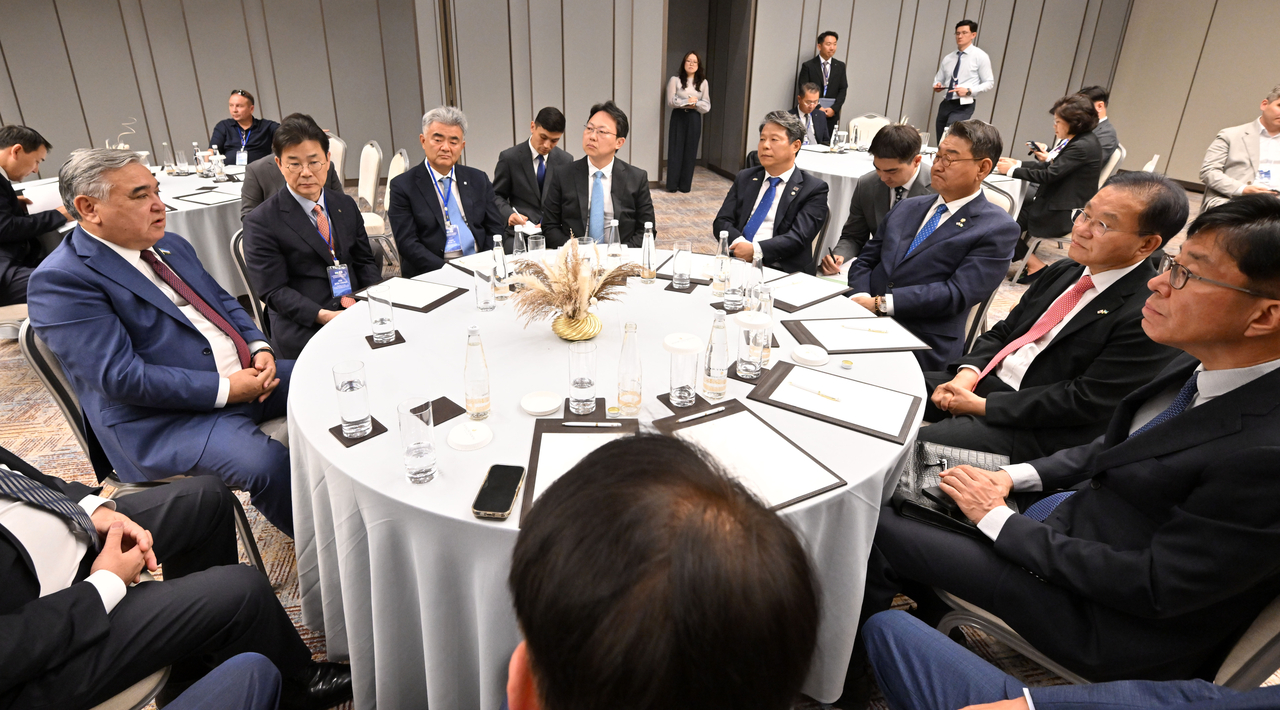
Prior to the main forum proceedings, a distinguished VIP tea session convened senior Uzbek officials, Korean lawmakers, and prominent business leaders, where they collectively affirmed their strong support for further strengthening bilateral economic ties.
“Numerous areas exist where our two nations can cultivate mutual benefits, including high-speed rail networks, modern airports, and the textile industry,” stated Rep. Kim Kyo-heung of the ruling Democratic Party of Korea, who also chairs the Korea-Uzbekistan parliamentary friendship association.
“K-culture also holds significant potential to serve as an important unifying link. While the historic Silk Road primarily focused on trade, today’s new ‘Silk Road’ can evolve into a vibrant bridge connecting culture, the arts, and cutting-edge artificial intelligence.”
Agzamkhodjaev reflected on his visits to Korea in the 1990s, marking the nascent years of diplomatic relations between the two countries. He conveyed that South Korea had served as an invaluable model for Uzbekistan as it embarked on opening up to the world after gaining independence in 1991 and began establishing democratic institutions.
Distinguished participants from South Korea included Rep. Kim Kyo-heung of the Democratic Party; Rep. Yun Jae-ok of the main opposition People Power Party; Rep. Seo Young-seok of the Democratic Party; Won Do-yeon, the South Korean Ambassador to Uzbekistan; and Kim Young-man, Director General for Trade Policy Coordination at the Ministry of Trade, Industry and Resources.
Senior Uzbek officials attending the forum comprised Agzamkhodjaev; Ilzat Kasimov, Deputy Minister of Investment, Industry and Trade; Yusupov, Deputy Minister of Mining and Geology; Ilkhomjon Abdugafarov, Deputy Minister of Transport; Sharof Radjabov, Deputy Director of the Directorate for the Construction of New Tashkent; Rukhullo Zikrillayev, Deputy Director of the Light Industry Development Agency; and Nodirbek Berdikobilov, Head of IT Product Expansion Division at IT Park Uzbekistan.
Tashkent marks the fifth international location for the Herald Media Group’s distinguished business forum series, following successful events in Vietnam (2022), Indonesia (2023), India (2024), and Bangkok (2025).