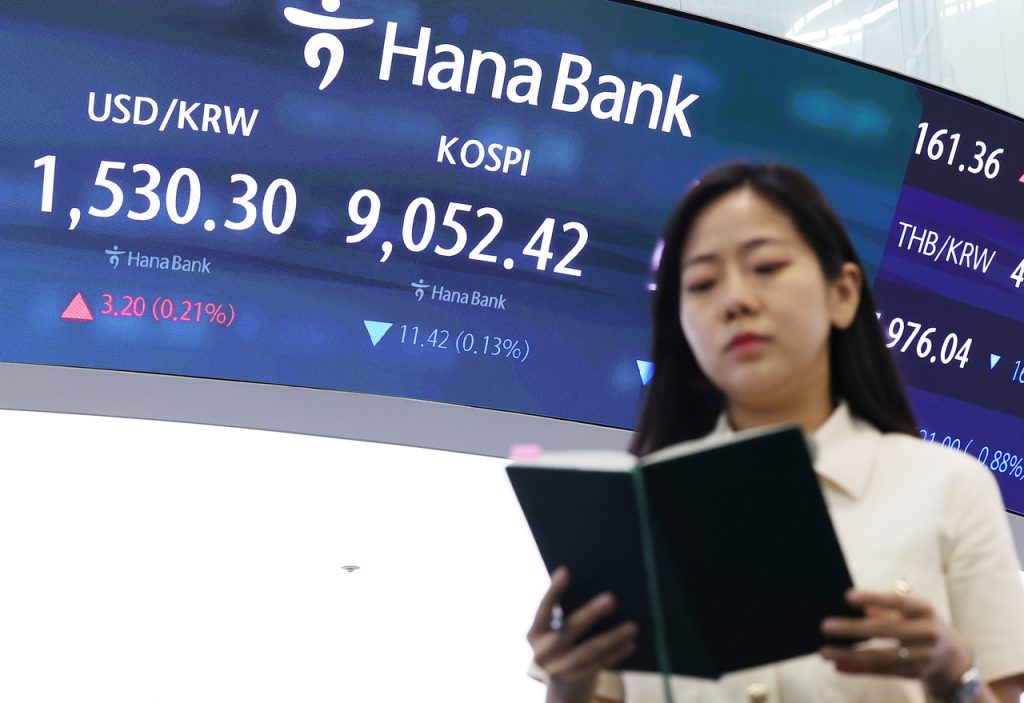
The **South Korean Won** has experienced significant **currency weakness** against the US dollar, with its average exchange rate surpassing 1,520 won per dollar in June. This marks the highest level recorded since February 1998, signaling a prolonged period of depreciation often linked to major economic crises.
Recent data from the **Bank of Korea’s Economic Statistics System** confirms this trend, showing the **won-dollar exchange rate** averaged 1,521.4 won in daytime trading up to June 19.
This recent performance represents the weakest monthly average for the **South Korean Won** against the US dollar since February 1998, a period when the exchange rate hit 1,626.7 won during the devastating **Asian financial crisis**. Furthermore, the current average is approximately 70 won higher than the 1,453.3 won recorded in March 2009 amidst the **global financial crisis**, underscoring the severity of the present depreciation.
Beyond just the peak levels, the **Won’s weakness** has been sustained over an extended period. Up to June 19, the currency had traded above 1,500 won for 23 consecutive trading sessions. This marks the longest such streak since the 49-session run observed between December 1997 and March 1998, further highlighting the persistent pressure on the **South Korean currency**.
Complementing these figures, other economic indicators also confirm that the **Won’s depreciation** is more profound than headline numbers suggest.
Specifically, data released by the **Bank for International Settlements (BIS)** reveals that **South Korea’s real effective exchange rate (REER) index** dropped to 84.75 in May. This represents its lowest point since March 2009. The **REER** is a critical measure, reflecting a currency’s **purchasing power** relative to its key trading partners, adjusted for **inflation**, providing a comprehensive view of its international value.