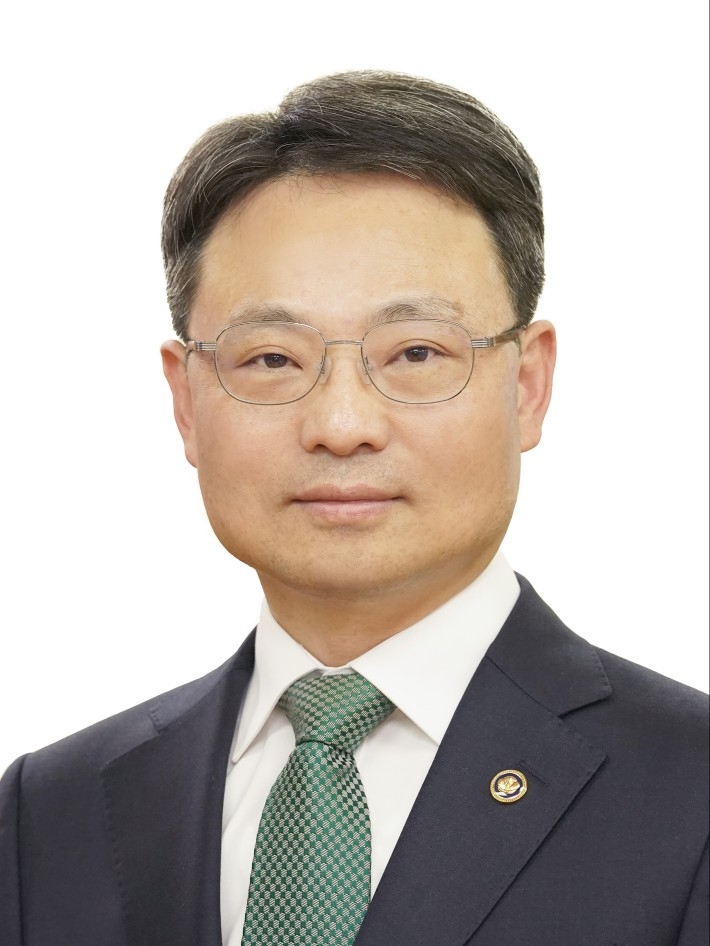
By Park Eun-sik
Minister of Korea Forest Service
As designated by the United Nations, June 17 marks the annual observance of the **World Day to Combat Desertification and Drought**. This significant day, established to commemorate the 1994 adoption of the United Nations Convention to Combat Desertification (UNCCD), serves as a crucial global call to action. It urges the international community to acknowledge the escalating severity of **desertification**, **land degradation**, and **drought**, while reaffirming our collective commitment to effective solutions. This year’s compelling theme — “Rangeland: Recognize, Respect, Restore” — highlights the critical urgency of preserving healthy, productive landscapes, especially in the face of our current **climate crisis**.
The statistics from the UNCCD paint a stark picture: an estimated 55 million individuals worldwide are directly impacted by **drought** annually. Projections indicate an alarming future, with approximately 75 percent of the global population potentially facing **drought conditions** by 2050. Currently, a staggering 3.2 billion people are already suffering the consequences of **desertification**, leading to substantial global **economic losses** that equate to 10 percent of the world’s GDP each year.
**Desertification and drought** are no longer distant threats; they are palpable realities impacting our daily existence. Each spring, we witness skies clouded by debilitating yellow dust and fine particulate matter, often necessitating masks for outdoor activities. This phenomenon is a direct consequence of **desertification and land degradation** in neighboring regions, particularly China and Mongolia, where dry, exposed topsoil is carried by winds directly onto the Korean Peninsula. Indeed, **land degradation across the region** has evolved into a significant, shared environmental challenge.
More than just the expansion of deserts, **desertification** fundamentally represents a severe process of environmental degradation. It signifies the gradual loss of productivity in land vital for human survival. A confluence of factors — including unregulated development, unsustainable overgrazing, and altered precipitation patterns exacerbated by **climate change** — are rapidly accelerating this **land degradation** globally. The downstream consequences are profound and multifaceted: a decline in global **food production**, irreplaceable loss of **biodiversity**, exacerbation of poverty, intensifying **climate crisis**, and rising public health threats. Ultimately, these factors collectively jeopardize a truly **sustainable future** for all humanity.
In confronting the urgent global imperative of combating **desertification and drought**, forests emerge as indispensable natural allies. Forests transcend mere tree stands; they are complex ecological powerhouses that critically anchor soil, efficiently store vital water resources, and drive essential atmospheric moisture cycles that ensure rainfall returns to the land. A vibrant, healthy forest directly correlates with increased land water retention, more stable river flows, and significantly enhanced community resilience against the impacts of **drought and extreme heat**. During this era of **climate crisis**, the value of forests extends beyond their well-known capacity for **carbon absorption**; they are fundamental in sustaining the healthy **water cycles** indispensable for all life on Earth.
**South Korea** stands globally recognized for its remarkable success in **forest restoration**, having revitalized landscapes devastated by colonial rule and war. This achievement now serves as an inspiring model for nations worldwide. Building upon this powerful legacy, the **Korea Forest Service** is proactively advancing robust **international forest cooperation**. We actively share our unparalleled knowledge, extensive experience, and advanced technical expertise gained from decades of **restoring degraded land** with developing countries across the globe.
Illustrating our commitment, a prime example is our impactful work with nations confronting severe **desertification challenges**, including Mongolia and Tajikistan. Here, we provide crucial support for the scientific cultivation of resilient seedlings and facilitate the transfer of advanced technologies essential for healthy tree growth. Furthermore, we actively collaborate with the **UNCCD** to empower countries in implementing and achieving ambitious **land degradation neutrality** targets. Our extensive partnerships with prominent international organizations — such as the FAO, UNEP, and the Asian Forest Cooperation Organization (AFoCO) — underscore our leadership in global initiatives to **restore degraded land** and bolster **climate resilience** throughout Africa, Asia, and beyond.
**Combating desertification and drought** is a monumental undertaking that transcends the capabilities of any single government or nation. It necessitates the unwavering commitment and active participation of businesses, civil society organizations, and individual citizens worldwide. In Mongolia, for instance, a consortium of dedicated private-sector partners — including Yuhan-Kimberly, Korean Air, E-mart, Industrial Bank of Korea (IBK), and the Asia-Pacific Forum — has been proactively working since 2007 to combat desertification. This showcases a successful model of **public-private forest cooperation** to the international community. Furthermore, everyday individual efforts, such as **saving water**, actively **planting trees**, and practicing **sustainable land use**, collectively drive meaningful change towards the crucial goal of **restoring our planet**.
This **World Day to Combat Desertification and Drought** provides a vital opportunity for us all to reflect deeply on the intrinsic value of the land, water, and forests that we frequently undervalue. Indeed, every single tree we plant and every forest we carefully tend represents one of the most impactful and meaningful investments we can possibly make in the long-term health and enduring prosperity of future generations. The **Korea Forest Service** is resolute in its mission and will continue to forge ahead with a profound sense of responsibility, dedicated to **planting and nurturing trees** and relentlessly working to **restore the vitality of our forests** and, by extension, our entire planet. I sincerely invite you to join us on this critical journey towards building a **greener, more resilient, and truly sustainable future** for everyone.
Park Eun-sik is the Minister of the **Korea Forest Service**. The views expressed in this column are the writer’s own. — Ed.
khnews