
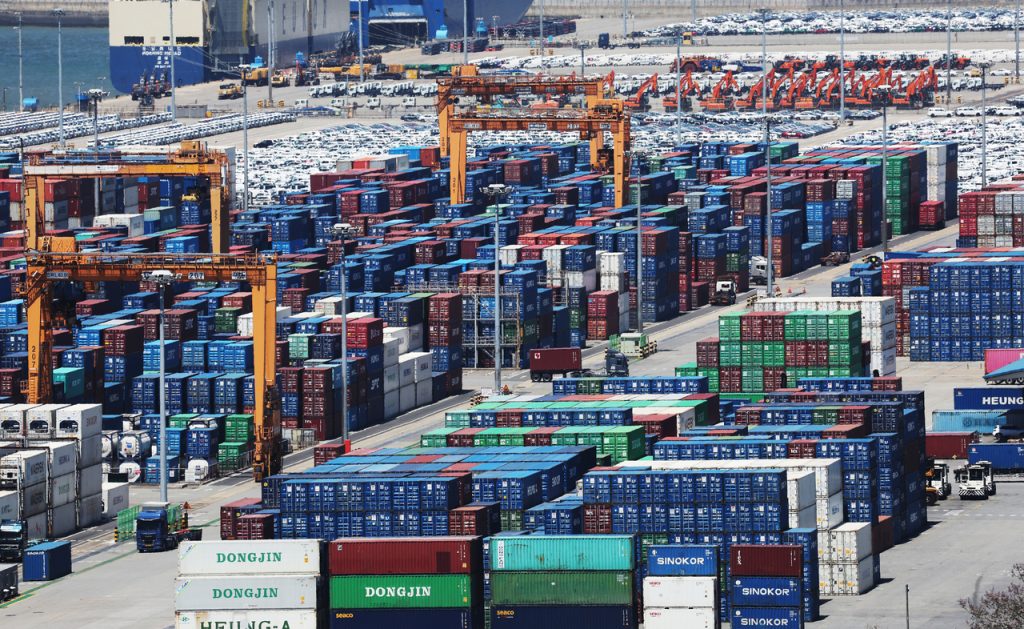
AI-Driven Semiconductor Boom Fuels South Korea’s Economic Growth Across Exports, Consumption, and Government Revenue
Bank of America (BofA) has significantly upgraded its 2026 economic growth forecast for South Korea, attributing the robust revision to a powerful artificial intelligence (AI)-driven semiconductor boom. This surge, the bank notes, is now strong enough to boost the nation’s exports, investment, consumption, and overall government revenue.
In a report released Tuesday, BofA elevated its projection for South Korea’s Gross Domestic Product (GDP) growth in 2026 to 3.1 percent, a substantial increase from its prior estimate of 1.9 percent. The bank characterized this upward revision as signaling “a clear shift to above-trend expansion” for the Korean economy.
Furthermore, the bank’s current account surplus projection for South Korea was raised to 15 percent of GDP, reflecting stronger-than-anticipated momentum within the global tech cycle.
This significant revision represents one of the most bullish outlooks for Korea’s economy, driven by the sustained, surging demand for memory chips essential for AI servers. This demand continues to propel South Korean exports and corporate earnings. BofA specifically noted a 48 percent increase in its DRAM price forecast for this year, up from its March projection.
Year-to-date figures show South Korea’s total exports climbing by 41 percent, with the semiconductor sector alone contributing an impressive 36 percentage points to this rise. “This semiconductor-driven upswing,” the report highlighted, “has consistently underpinned headline economic growth.”
BofA projects that net exports will be a significant driver, contributing 1.3 percentage points to GDP growth in both the current year and the next, a key factor solidifying its upgraded economic outlook.
Beyond exports, the report indicates that the robust chip cycle is now broadening its impact. Facility investment saw a notable rebound in the first quarter, fueled by increased spending related to semiconductors. This trend is further underscored by expectations that combined capital expenditure (capex) from industry giants Samsung Electronics and SK hynix will surge by 41.9 percent this year.
Furthermore, domestic consumption is demonstrating clear signs of recovery. March saw retail sales increase by 7.3 percent year-on-year, marking the strongest growth since August 2022. Department store sales also climbed by 10.5 percent. BofA suggests that South Korea’s ongoing stock market rally might be enhancing the nation’s typically modest equity wealth effect, particularly benefiting middle- and higher-income households.
The burgeoning semiconductor industry is also significantly bolstering the South Korean government’s fiscal position. BofA estimates that Samsung Electronics and SK hynix could collectively contribute more than 100 trillion won ($66.68 billion) in tax revenue this year, an amount equivalent to approximately 4 percent of GDP, and over tenfold their average contribution for the past decade.
This substantial increase in revenue could provide the government with scope for an additional supplementary budget of approximately 25 trillion won in the second half of the year, following the 26.2 trillion won package enacted in April, the bank indicated.
BofA commented that “This sets up a rare alignment of strong private-sector capital expenditure (capex) and public fiscal stimulus, reinforcing the growth upside while helping to offset the energy shock,” suggesting a potent combination for economic expansion.
However, this more robust economic outlook is accompanied by a significant policy implication. BofA now anticipates that the Bank of Korea will implement two interest rate hikes in the latter half of the year, potentially bringing the terminal rate to 3 percent.
The bank justified its prediction by citing several factors: above-trend growth, inflation projected to average around 2.7 percent, elevated oil prices due to the prolonged Middle East conflict, and the persistent weakness of the Korean won near the 1,500 level against the US dollar. It also highlighted a more hawkish stance emerging within the central bank’s monetary policy board.
Lingering risks to this optimistic forecast include the sustainability of the AI-led chip cycle into next year, potential energy shocks, broader geopolitical spillovers, and the possibility of policy overtightening. Nevertheless, BofA asserts that existing fiscal buffers and minimal production disruptions to date suggest these challenges remain “tail risks rather than cycle-breakers” for South Korea’s economic trajectory.
jwc


