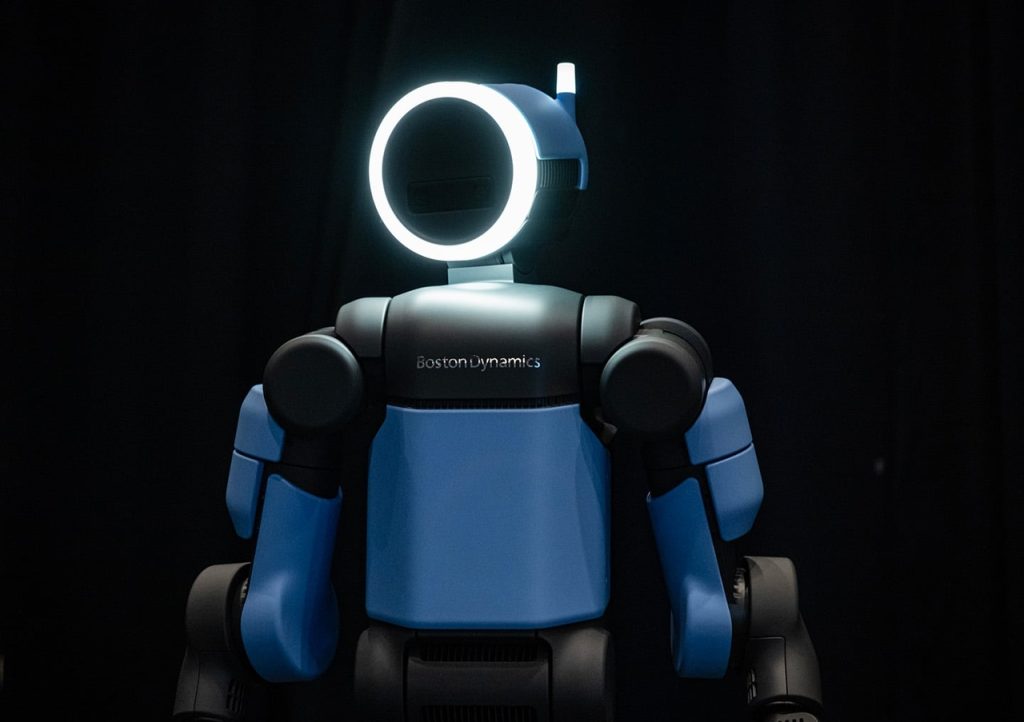
Hyundai Motor Group is significantly ramping up its investment in humanoid robotics by establishing new divisions. These units are specifically designed to support the widespread deployment of Atlas, the advanced humanoid robot developed by its US-based robotics subsidiary, Boston Dynamics, across its global vehicle production lines.
Reports on Tuesday confirmed Hyundai’s formation of a new software-defined factory (SDF) promotion division, with Alpesh Patel appointed as its executive vice president. An SDF represents a cutting-edge smart manufacturing facility where artificial intelligence (AI) orchestrates production, logistics, and quality control through sophisticated software-driven operations, moving beyond reliance on fixed hardware systems.
Before joining Hyundai in 2023 as chief innovation officer at the Hyundai Motor Group Innovation Center Singapore, Patel held a prominent role as a partner of Digital Capability Centers for Asia-Pacific at McKinsey & Company. Given Singapore’s function as a global testbed for Hyundai’s advanced manufacturing initiatives, industry insiders interpret Patel’s transfer as a clear signal of the automaker’s readiness to expand its software-defined manufacturing strategy, with Atlas at its core.
Patel’s responsibilities are expected to encompass overseeing SDF operating systems, digital twin technologies, and comprehensive factory data management. He will also serve as a central control tower for the strategic deployment of Atlas robots across Hyundai’s worldwide production sites.
The automaker has ambitious plans to achieve an annual robot production capacity of 30,000 units by 2028. This robust capacity will enable the deployment of over 25,000 robots across Hyundai and Kia manufacturing plants. The initial rollout of Atlas robots is slated for 2028 at the Hyundai Motor Group Metaplant America in Georgia, where they will primarily handle parts sequencing. By 2030, their capabilities will be expanded to include complex component assembly tasks.
Beyond its US operations, Hyundai aims to integrate SDF technologies, including advanced AI-driven automation and robotics, across key international production hubs. This expansion includes facilities such as its Pune plant in India and the electric vehicle (EV) factory located in Ulsan, South Korea.
In a related strategic move, Hyundai has also established a dedicated robotics parts procurement division, appointing So Hyun-sung, formerly head of development and planning at Beijing Hyundai, as its director. This new unit is tasked with enhancing cost competitiveness and ensuring a stable and secure supply of essential core components vital for the mass production of Atlas robots.
So Hyun-sung is anticipated to leverage Hyundai’s extensive global supply network to source critical robot parts from external suppliers. This effort will be closely coordinated with key affiliates, including Hyundai Mobis, which is at the forefront of developing six core parts for Atlas, such as advanced joint actuators, precision hand grippers, and head modules.
Industry experts suggest that, given So’s significant expertise in Chinese operations, Hyundai might explore the option of utilizing cost-efficient robotics components sourced from China to optimize production costs.
However, in the United States, a primary market for Hyundai’s humanoid robotics initiatives, sourcing Chinese-made hardware for commercial robots faces selective bans, depending on the specific functions of the components. Parts critical for data processing, advanced sensing systems, or battery technologies may encounter restrictions within the private sector and are subject to even more stringent hurdles for government procurement.
Furthermore, Hyundai has proactively created a global trade strategy division under its global policy office. This division is designed to adeptly navigate the complexities of growing international trade uncertainties, including potential US auto tariffs and the ongoing Middle East conflict. The unit will be led by Chang Jae-ryang, a former official from Korea’s Industry Ministry who joined Hyundai in 2024 and most recently headed the Global Policy Office (GPO).
This comprehensive restructuring effort comes at a crucial time, as Hyundai and Kia have reportedly faced escalating tariff-related costs, which reached an estimated 7.2 trillion won ($4.8 billion) last year, underscoring the need for robust global strategy and cost management.
hyejin2