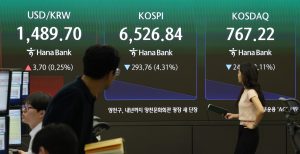
Hana Financial’s Strategic W1 Trillion Upbit Investment: Banks Vie for Dominance in Korea’s Digital Payment Future
Hana Financial Group’s substantial 1 trillion won ($662 million) investment in Dunamu, the operator of leading crypto exchange Upbit, transcends a mere cryptocurrency play. This move represents a critical strategic wager by banks to maintain their pivotal role in the evolving digital finance landscape.
Despite Korea’s ongoing regulatory discussions regarding the issuance of won-backed stablecoins and the participation of exchanges and fintech firms, major financial groups are actively forging ahead. Their current strategies involve consolidating control over key infrastructure: crypto exchanges, card networks, digital wallets, and crucial remittance channels. These acquisitions are pivotal in determining whether won stablecoins will evolve into integrated financial infrastructure rather than remaining isolated digital tokens.
Hana’s proposed acquisition of a 6.55 percent stake in Dunamu, the company behind Korea’s preeminent crypto exchange, Upbit, stands as a stark indicator of how traditional banks are strategically adapting. This investment grants Hana direct access to Upbit’s extensive user base, projected at 13.26 million by late 2025. Furthermore, Dunamu’s Giwa Chain offers a potential foundational layer for Hana’s future on-chain transactions, shifting payment and transfer records from conventional bank ledgers to advanced blockchain infrastructure.
This strategic move resonates deeply with Hana Financial Group Chairman Ham Young-joo’s expansive vision for stablecoins. Chairman Ham has articulated the group’s intent to be more than just a passive observer in the transforming financial sector; instead, they aspire to be “architects of the market,” constructing a comprehensive ecosystem encompassing stablecoin issuance, distribution, utilization, and circulation.
During an earnings conference call in January, Ham underscored this ambition, stating, “New growth opportunities undoubtedly lie within stablecoins. However, merely issuing coins will not suffice to unlock these opportunities. We must actively shape new regulations and lead the market through this evolving financial paradigm.”
Professor Hwang Suk-jin of Dongguk University Graduate School of International Affairs and Information Security views Hana’s initiative as a deliberate strategic wager on establishing the benchmarks for Korea’s forthcoming digital-asset ecosystem.
He elaborated, “While crypto firms possess robust technological capabilities, they often lack the established trust within the regulated financial system. Conversely, banks command significant trust and financial capital, yet their innovation cycles are typically slower. Such strategic alliances can effectively bridge the inherent weaknesses of both sectors.”
This bold step by Hana illustrates both the profound ambition and underlying anxiety prevalent within the banking sector. Globally, stablecoin development has frequently occurred outside the purview of traditional banks, spearheaded by crypto-native entities, exchanges, and specialized payment providers. Nevertheless, in Korea, banks are poised to assume a central role due to their robust regulatory standing, extensive deposit base, mature anti-money laundering frameworks, and deep expertise in managing critical payment and settlement infrastructure.
Professor Hwang emphasized that banks are proactively securing their traditional roles in payments and deposits. He warned that if large tech companies or independent platforms dominate the stablecoin market, significant bank deposits could migrate to digital wallets, thereby compelling banks to establish a strong presence within the emerging digital-asset market.
Consequently, other prominent financial groups are also taking preemptive action ahead of final legislative clarity. KB Financial Group, for instance, recently concluded a successful Proof of Concept (PoC) in collaboration with KG Inicis, Kaia, and Open Asset. This PoC explored won stablecoin-based payments, merchant settlements, and international remittances. Notable aspects of the trial included QR payments at a local café and an innovative Vietnam remittance model. This model converted won tokens into dollar stablecoins, drastically reducing transfer times to under three minutes and cutting fees by approximately 87 percent.
Shinhan Financial Group is pursuing an alternative strategy, leveraging established global payment networks. Shinhan Card has successfully piloted stablecoin-based overseas payment and settlement frameworks in partnership with industry giants like Visa, Mastercard, and the Solana Foundation. This initiative also involved integration with popular external wallets such as MetaMask and Phantom. With its substantial base of approximately 14.5 million individual credit card holders, Shinhan’s key advantage is its ability to seamlessly integrate stablecoins into existing, widely adopted consumer payment channels.
Rather than pursuing a singular, high-profile acquisition, Woori Financial Group is strategically preparing through a multifaceted approach, focusing on consortium development, digital wallets, B2B settlements, and international remittances. In a recent interview with Edaily, Ok Il-jin, Vice President and head of Woori Bank’s AX Innovation Group, emphasized, “The critical factor is developing clear, customer-centric use cases.” He further noted that once relevant legislation is enacted, “all market participants will commence from an equal starting point.”
This intense competition extends beyond the four primary banking conglomerates. Mirae Asset Group’s reported acquisition of Korbit, coupled with Korea Investment & Securities’ rumored consideration of a Coinone investment, indicates that even brokerage firms perceive crypto exchanges as crucial entry points into the broader digital asset value chain. BC Card and K bank contribute a distinct payments and remittances dimension. BC Card is piloting stablecoin-linked prepaid cards tailored for international visitors, while K bank collaborates with Ripple on innovative blockchain-based overseas remittance solutions.
For banks, navigating this evolving landscape presents a dilemma: the risk of acting prematurely in a market still awaiting clear regulations versus the potentially greater risk of delaying action for too long.
“Banks cannot afford to remain static simply because the legal framework is still pending,” Professor Hwang asserted. “Legislation will inevitably materialize, and it is imperative for them to have foundational preparations in place to effectively respond when that moment arrives.”
jwc