
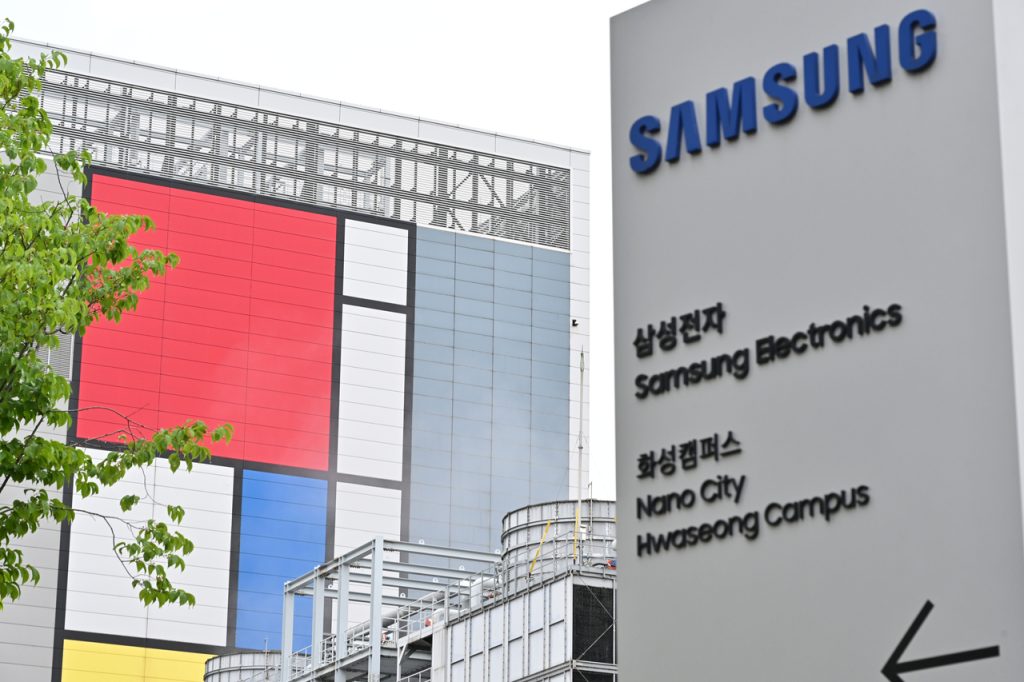
Samsung Electronics is poised to deliver its strongest quarterly financial performance on record in the second quarter, driven by a robust **memory market** fundamentally reshaped by soaring **AI demand**. This positive momentum in chip prices persists even as a critical **wage settlement**, which averted a potential company-wide **strike**, awaits its final ratification vote, concluding this Wednesday.
According to leading financial data provider FnGuide, the consensus among analysts for Samsung’s April-June quarter projects impressive figures: 165.48 trillion won ($109.7 billion) in **revenue** and 85.25 trillion won in **operating profit**. These estimates represent significant year-over-year increases of 121.9 percent and an astounding 1,723.2 percent, respectively. The substantial surge in operating profit partly reflects a lower comparative base from the previous year.
This projected growth is set to extend Samsung’s strong financial run, following a record 57.2 trillion won **operating profit** achieved in the first quarter, where the **chip division** remarkably contributed 94 percent of the company’s total earnings.
Indeed, the **semiconductor division** remains the primary growth engine for Samsung. Extensive **AI infrastructure spending** by major global tech firms has fueled an unprecedented demand for **high-bandwidth memory (HBM)**, with these gains now spreading across the entire **memory product line**. As fabrication capacity increasingly prioritizes **HBM** and high-end server memory, the supply of conventional **DRAM** has tightened, consequently driving up prices even for commodity chips. Industry analysts anticipate **DRAM average selling prices (ASPs)** to climb by 45 percent from the previous quarter, with **NAND flash** prices expected to rise by 50 percent.
Ryu Young-ho, a prominent analyst at NH Investment & Securities, highlights that the expanding adoption of **agentic AI** is contributing to the exceptional durability of the current **memory market cycle**. He further notes that an increase in **long-term supply agreements** has significantly bolstered Samsung’s mid-term **earnings stability**. Such multi-year contracts with key tech customers signal a pivotal shift away from the historically volatile boom-and-bust cycles that have long defined the **semiconductor industry**.
This optimistic financial outlook is underpinned by a **tentative wage deal** reached last Wednesday, just hours before a planned **union walkout**. Union members are currently participating in a crucial ratification vote, scheduled to conclude on May 2. While passage is largely anticipated, a vocal faction within the consumer-device division is actively campaigning against the agreement, citing disparities in pay and bonuses compared to **chip-division staff**. A rejection of the deal would reinstate Samsung’s eligibility for a **labor strike**.
For the full financial year, Samsung Electronics is projected to achieve **record revenue** of 684.16 trillion won and an unprecedented **operating profit** of 344.97 trillion won, underscoring its robust market position in the evolving **tech landscape**.
mjh


