
KAIQA Advocates for Flexible Digital Asset Regulations & Institutional Growth Amidst Market Volatility
South Korea’s National Pension Service (NPS) recently highlighted persistent uncertainty across global financial markets, even as the pension fund achieved its third consecutive year of record-breaking returns. This nuanced landscape underscores the complexities facing institutional investors today.
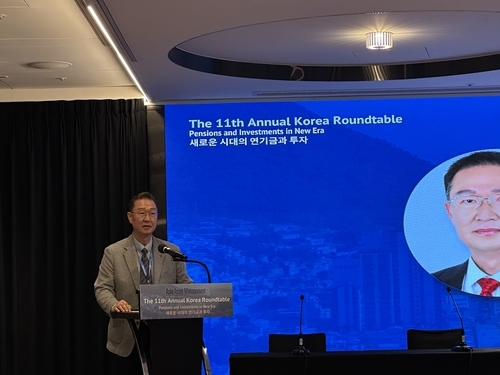
During Asia Asset Management’s 11th Korea Roundtable in Seoul, NPS Chief Investment Officer Seo Won-joo elaborated on intensifying market volatility. He cited a confluence of factors including geopolitical tensions, growing protectionism, and the rapid evolution of artificial intelligence as key drivers impacting investment strategies.
Despite these challenges, Seo confirmed the NPS posted an impressive 18.82 percent annual return last year, marking its third consecutive year of unprecedented performance. Nevertheless, he reiterated that significant uncertainties continue to cloud the global economic and financial outlook, demanding robust strategic responses.
In response, the NPS is actively strengthening its risk management protocols and substantially upgrading its investment framework and infrastructure to navigate these complex market conditions effectively.
Furthermore, the pension fund plans to broaden its total portfolio approach, integrating domestic and overseas equities and bonds alongside its existing alternative investments. A significant upgrade is also underway for its cloud-based overseas investment platform, designed to seamlessly connect NPS offices in London, New York, San Francisco, and Singapore with its headquarters in Korea, enhancing global operational efficiency.
Beyond traditional finance, the roundtable also delved into critical emerging areas, including the evolving landscape of digital assets and advanced AI-driven investment strategies.
Kim Hong-gon, who leads the Korea AI Quant Professionals Association (KAIQA), commented on Korea’s Virtual Asset User Protection Act. While acknowledging its role in establishing minimum safeguards for the digital asset market, Kim strongly advocated for more flexible and globally aligned regulatory frameworks to foster innovation and growth.
KAIQA emphasized that increased institutional participation is crucial for stabilizing the crypto market and expanding multi-asset investment opportunities. However, Kim also cautioned against potential systemic risks that could impact the traditional financial system, underscoring the need for careful integration and oversight.
Looking ahead, Kim suggested that won-based stablecoins hold significant potential as foundational infrastructure, bridging traditional payments, tokenized securities, and central bank digital currencies (CBDCs). He further identified AI-powered quantitative investing and direct indexing as powerful new growth drivers set to revolutionize the digital asset market.
ch0221


