
US stablecoin giant files for names, logos as Korea weighs digital asset rules
Tether, the world’s largest stablecoin issuer, has recently made new trademark filings for its corporate name and various logos, signaling potential preparations for a more formal presence in the South Korean market.
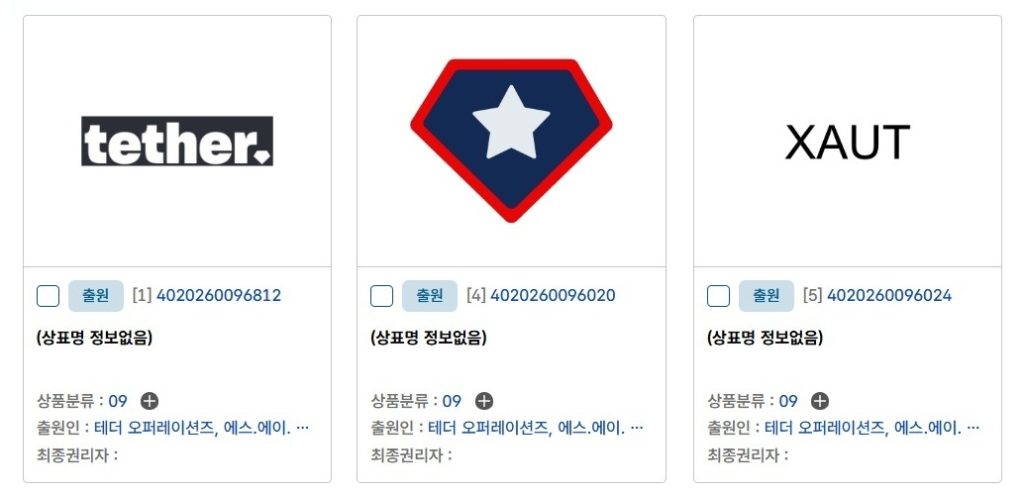
Trademark records from the Korea Intellectual Property Rights Information Service, or KIPRIS, confirmed on Wednesday that Tether Operations submitted nine applications last week covering its brand and product offerings.
These comprehensive applications include the prominent Tether name, its gold-backed digital asset XAUT, the decentralized AI platform QVAC, USAT (a US dollar-backed stablecoin tailored for regulated US institutions), and distinct shield-shaped brand logos. The filings, initiated between May 12 and May 14, are currently pending examination by the Korean Intellectual Property Office.
These latest submissions build upon six prior trademark applications by Tether. The company initially registered its name in 2019, subsequently filing for a kUSDT logo in 2022. Applications for WonTether and KRWT, which appear to be associated with won-backed stablecoins, were filed last year and are presently under examination. Additionally, a separate Tether logo application and USDT0, both submitted earlier this year, also await examination.
Industry observers suggest that these recent filings extend beyond mere brand protection, potentially laying the groundwork for a strategic entry into Korea. This comes as lawmakers actively discuss a foundational digital asset law that could mandate foreign stablecoin issuers to establish a local branch to distribute their tokens within the country.
Further underscoring its engagement, Tether Chief Compliance Officer Leonardo Real participated in a National Assembly seminar in Seoul last week. The seminar focused on global stablecoins and Korea’s pivotal role in the digital economy, where Real shared insights on ecosystem development and regulatory compliance.
Tether’s proactive steps are indicative of a broader trend, as global crypto companies accelerate efforts to secure local footholds in anticipation of new, comprehensive regulations. In a similar vein, Circle, the issuer of the second-largest stablecoin USDC, visited Seoul in April. During its trip, Circle engaged with local financial institutions and digital asset players, announcing strategic partnerships with Korean banks and crypto exchanges.
jwc


