South Korean Business Groups Warn Samsung Electronics Strike Threatens Chip Exports, Investment, and National Economy
South Korea’s leading business federations issued a joint plea on Monday, calling on the Samsung Electronics labor union to abandon its proposed general strikes. They warned that any prolonged industrial action by the union could severely imperil the nation’s vital semiconductor industry and destabilize the wider South Korean economy.
These six influential organizations, including the Korea Enterprises Federation, Korea Chamber of Commerce and Industry, Federation of Korean Industries, Korea International Trade Association, Korea Federation of SMEs, and the Federation of Middle Market Enterprises of Korea, collectively urged the union to re-engage in dialogue and withdraw its intent to strike.
This unified appeal precedes anticipated strike action by Samsung’s largest union, fueled by an ongoing dispute concerning employee compensation and bonus structures. The union has announced plans for over 45,000 workers to participate in an 18-day walkout starting Thursday, a development poised to significantly disrupt operations at Samsung Electronics, the world’s foremost memory chip manufacturer.
In their joint statement, the business groups emphasized, “The proposed strike by the Samsung Electronics union represents an action that could fundamentally undermine the pillars of our nation’s core industries.” They stressed, “The union must reconsider its strike decision and pursue resolution through constructive dialogue.”
Expressing profound apprehension, the industry leaders voiced concern over the union’s steadfast decision to proceed with the strike, even after mediation attempts by both the government and the National Labor Relations Commission. They criticized the union’s unwavering hard-line position.
Furthermore, they pressed the government to promptly invoke emergency arbitration measures should the strike commence, aiming to avert “irreversible damage” to the national economy and its intricate industrial ecosystem.
Central to this protracted dispute is the union’s demand to formalize a performance-based bonus system, proposing that employees receive up to 15 percent of the company’s operating profit, crucially, without any cap on payouts.
However, Samsung Electronics management has firmly resisted institutionalizing these specific demands. The company instead offered a bonus equivalent to 10 percent of operating profit, but without formally integrating it into a collective agreement. Management also opposes eliminating the bonus cap, citing the inherent cyclical nature of the semiconductor business and the necessity for agile financial management adapting to fluctuating market conditions.
The business federations contended that the union’s bonus demands are essentially a call for profit-sharing rather than a revision of wages. They highlighted previous court rulings which established that such performance incentives do not qualify as ordinary wages under existing labor law.
Furthermore, they pointed out that the union’s proposed bonus payouts, estimated at a staggering 45 trillion won ($29.9 billion), would exceed Samsung Electronics’ total shareholder dividends from the previous year by more than fourfold. Such an expense, they argued, could severely compromise the company’s vital capacity for future investment and its long-term global competitiveness.
“Matters concerning performance bonuses fundamentally fall under managerial discretion, not within the scope of collective bargaining,” the groups asserted, labeling the union’s demands as “excessive.” They cautioned that meeting these demands could exacerbate labor market disparities and heighten social tensions.
The broader business community issued a stark warning: a significant strike at Samsung Electronics could quickly transcend a mere labor-management disagreement, escalating into a serious national economic risk for South Korea.
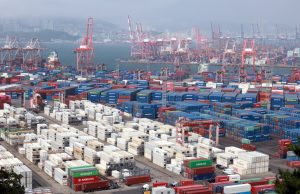
They underscored the paramount importance of the semiconductor industry to the nation, noting that chip exports alone constitute approximately 37 percent of South Korea’s total export volume.
“An industrial action at Samsung could trigger an immediate slump in exports and a worsening of the country’s trade balance,” the groups articulated, “simultaneously leading to shortfalls in tax revenue that would adversely impact the broader national economy.”
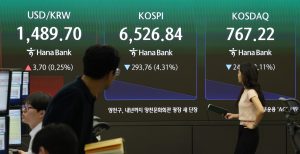
Furthermore, they projected that any significant financial losses incurred by Samsung Electronics – a conglomerate representing roughly a quarter of the Kospi’s total market capitalization – could precipitate a rapid exodus of foreign investors and exert downward pressure on South Korea’s wider capital markets.
sahn