
Bill Gates’ TerraPower, a leading U.S. developer of advanced small modular reactors (SMRs), has secured a significant deal to acquire cutting-edge Korean sodium-cooled fast reactor (SFR) safety testing technology. This substantial 7 billion won ($4.67 million) investment underscores South Korea’s pivotal role and advanced capabilities in the development of next-generation nuclear reactors, even amidst domestic challenges in accelerating commercialization.
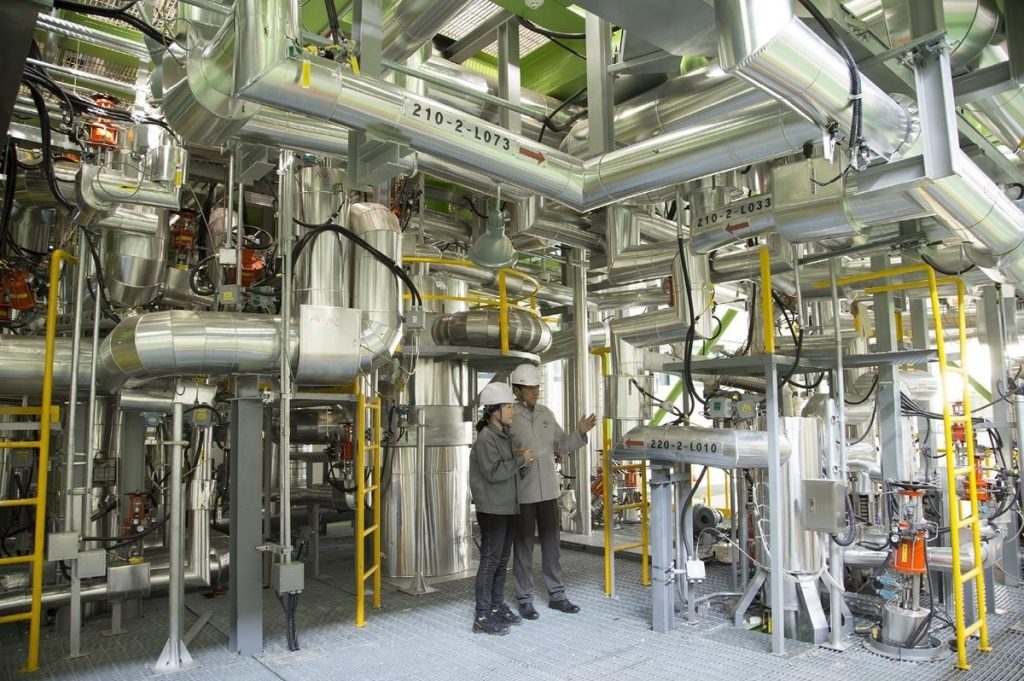
Sources from the Science Ministry and the Korea Atomic Energy Research Institute (KAERI) confirm that KAERI successfully transferred critical intellectual property to TerraPower last year. This transfer encompasses the design and manufacturing expertise for STELLA, a state-of-the-art testing facility engineered to simulate vital safety systems for prototype sodium-cooled fast reactors (SFRs).
Sodium-cooled fast reactors (SFRs) represent a significant leap in nuclear technology, utilizing liquid sodium as a coolant instead of conventional water. Their superior thermal efficiency and inherently enhanced safety characteristics position them as a cornerstone of next-generation nuclear power solutions.
STELLA’s core function is to meticulously simulate complex accident scenarios, rigorously validating reactor safety under various conditions. Through extensive operation, KAERI has amassed invaluable operational data concerning heat transfer and coolant flow dynamics within reactors, spanning both normal operating states and critical emergency situations.
This strategic technology transfer empowers TerraPower to independently establish and operate its proprietary SFR safety testing facility, significantly accelerating its own reactor development timelines.
Founded in 2008, TerraPower is actively advancing its Natrium reactor project in Wyoming. A major milestone was achieved in March when the company secured crucial construction approval from the U.S. Nuclear Regulatory Commission, highlighting its progress in bringing advanced nuclear technology to fruition.
Further solidifying the technology transfer agreement, approximately ten TerraPower employees undertook specialized training at KAERI between May 11 and 15. This intensive program focused on critical aspects of sodium cooling system design and operational methodologies, ensuring seamless integration of the acquired knowledge.
Industry experts lauded the deal as definitive proof of Korea’s robust capabilities in advanced reactor research and comprehensive testing. However, they also cautioned that inconsistent governmental support has unfortunately hampered the nation’s momentum in the critical commercialization phase of these cutting-edge nuclear technologies.
A prime example of this fluctuating support is the government’s public-private advanced reactor export infrastructure program. Initially envisioned to inject 29 billion won into SFR development from 2025 to 2028, the program faced significant setbacks when the 2025 budget underwent a drastic 90 percent reduction during National Assembly deliberations, plummeting from 7 billion won to just 700 million won.
Despite the budget being eventually restored to its original 7 billion won this year, the project had already incurred a substantial loss of approximately a year in crucial development time, consequently pushing its overall schedule back to 2029.
Beyond STELLA, KAERI has also been at the forefront of developing SALUS since 2021. This ambitious fourth-generation reactor project aims to ingeniously adapt SFR technology to not only generate electricity but also efficiently consume spent nuclear fuel from existing reactors, addressing a critical challenge in nuclear waste management.
The institute affirmed its commitment to further advancing the SALUS project, emphasizing the importance of continued public-private cooperation to realize its full potential and contribute to a sustainable nuclear energy future.
hyejin2


