
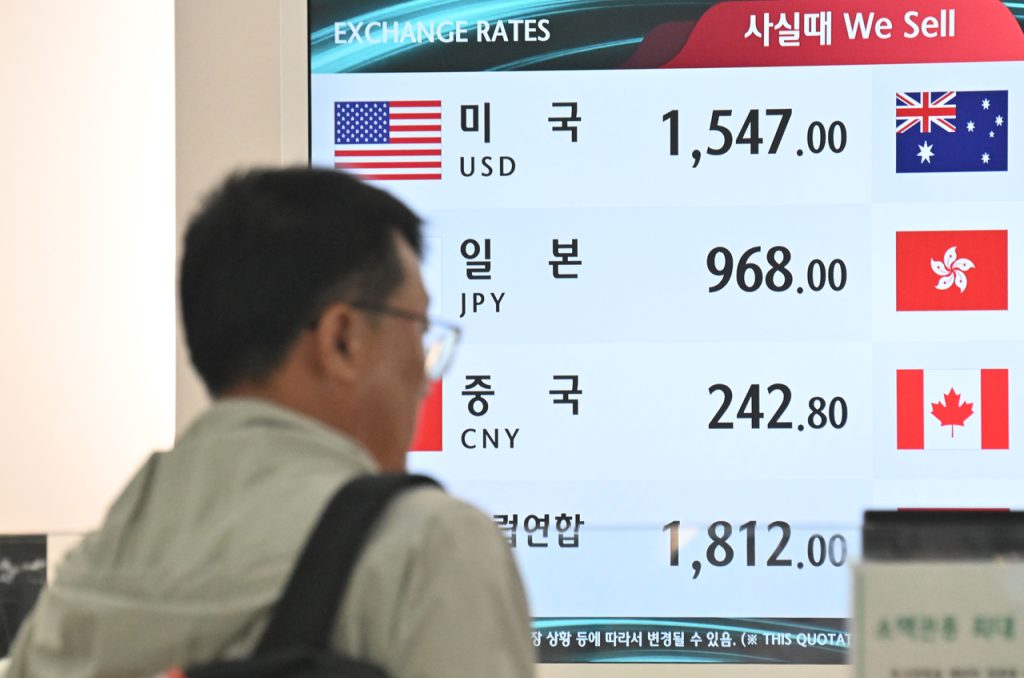
Korean Won Nears 1,500 per Dollar: Seoul Seeks Stronger US Financial Safety Net
South Korea is intensifying its efforts to secure a bilateral currency swap arrangement with Washington. This renewed push aims to stabilize the local Korean won amid increasing economic pressures stemming from the Middle East conflict and an anticipated surge in outbound investment flows toward the United States.
President Lee Jae Myung reportedly advanced this proposal during a recent meeting with US Treasury Secretary Scott Bessent, held at Cheong Wa Dae on Wednesday.
This isn’t the first time Korea has sought such a financial safety net. A previous proposal for an unlimited currency swap arrangement, made after trade talks last year, was reportedly not accepted by Washington.
The urgent need for this arrangement is underscored by the Korean won facing fresh depreciation pressure due to escalating tensions in the Middle East.
The won recently dipped to an over one-month low of 1,499.7 per dollar during Wednesday’s daytime trading, closely approaching the critical 1,500-per-dollar threshold. The currency has significantly weakened, shedding over 35 won per dollar from its closing rate of 1,454 on May 7. On Thursday, it was quoted at 1,492.68 per greenback during onshore trading by 2 p.m.
Further downward pressure on the Korean won is anticipated as outbound investment from Korea into the US is set to accelerate. This surge is expected with the launch of the Korea-US Strategic Investment Corp. next month. Resulting capital outflows, potentially reaching up to $20 billion annually, are projected to heighten volatility in the foreign exchange market.
In this challenging economic climate, a robust currency swap deal with the US is considered a vital financial safety mechanism for South Korea. It would help mitigate market volatility by guaranteeing access to dollar liquidity at a predetermined exchange rate.
“Currency swap agreements are crucial because they enable central banks to quickly acquire dollars and inject them into the market during periods of crisis,” explained a researcher from a prominent local think tank. “The mere presence of a currency swap line offers a significant psychological stabilizing effect on the market, irrespective of the arrangement’s specific size or terms.”
Intriguingly, the US government has reportedly been considering expanding its swap lines with key allies in the Gulf and Asia. This move, prompted by ongoing global events and reported by The New York Times, aims to reinforce the dollar’s global dominance.
While Washington has traditionally maintained a cautious stance on establishing permanent currency swap arrangements with nations not issuing reserve currencies, this latest strategic shift could potentially open a door for South Korea. The initiative is also viewed as an effort to counter the growing global influence of the Chinese yuan.
Currently, the US maintains permanent currency swap lines exclusively with five major counterparts: Canada, Japan, the European Union, the United Kingdom, and Switzerland.
South Korea’s Limited Dollar Liquidity Channels
Despite South Korea having currency swap agreements with several international partners, its direct channels for securing essential dollar liquidity remain notably limited. These arrangements primarily include a $10 billion currency swap line with Japan and a $38.4 billion facility under the Chiang Mai Initiative.
Given Korea’s lack of a direct currency swap line with the United States — the issuer of the world’s dominant reserve currency — securing such a deal is paramount. It is widely regarded as a critical financial backstop for the country’s economic stability.
Historically, Korea has benefited from such agreements during times of crisis. During the 2008 global financial crisis, for instance, Korea successfully signed a $30 billion currency swap deal with the US Federal Reserve. More recently, in March 2020, the two nations established a temporary $60 billion swap arrangement in response to the COVID-19 pandemic, through which Korea accessed approximately $19.87 billion in vital funding.
silverstar


