
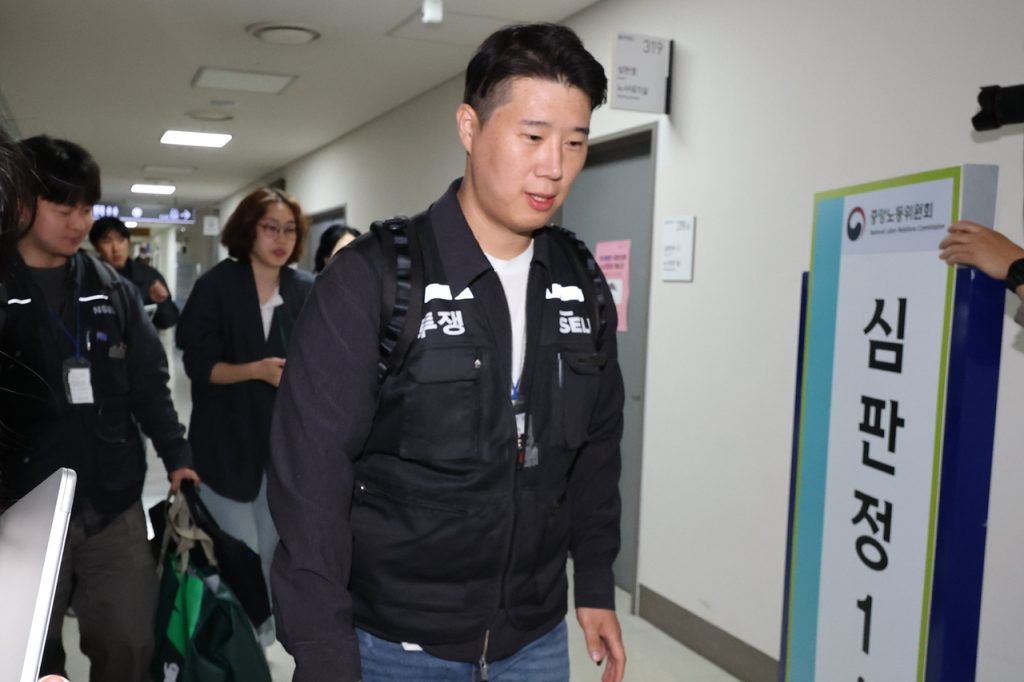
In a critical effort to avert Samsung Electronics’ unprecedented full-scale strike, set for May 21, South Korea’s National Labor Relations Commission (NLRC) on Thursday formally urged both Samsung and its largest union to resume post-arbitration wage talks this Saturday. This eleventh-hour intervention comes as the tech giant faces its first potential major labor disruption.
The NLRC’s request followed closely after Samsung itself extended an invitation for direct dialogue with both the Samsung Group Federation Union’s Samsung Electronics chapter and the National Samsung Electronics Union. Earlier intensive negotiations held Monday and Tuesday at the Sejong government complex faltered, primarily over the contentious issue of performance-pay reform, which has been the central obstacle since talks commenced in December.
At the heart of this South Korea labor dispute, the union champions a demand for 15 percent of the operating profit from Samsung’s lucrative semiconductor division to be allocated as a performance bonus pool. Furthermore, they seek to eliminate the existing cap of 50 percent of annual salary for these bonuses. Conversely, Samsung Electronics aims to maintain its current remuneration model, which is intrinsically linked to economic value added, offering only a one-time special bonus for its vital chip unit.
Union Chair Choi Seung-ho firmly stated on Wednesday that the union sees no justification for returning to the negotiating table until significant performance-pay reform is formally institutionalized. He reconfirmed plans for an extensive 18-day walkout, scheduled from May 21 through June 7, with expectations of participation from at least 50,000 of its members, underscoring the potential scale of the Samsung union action.
The economic repercussions of a prolonged strike are significant, with JPMorgan estimating potential losses reaching up to 43 trillion won ($28.8 billion), factoring in escalated labor costs and severe production disruptions. However, industry insiders have conveyed to local media that Samsung’s highly automated chip manufacturing lines might mitigate the immediate impact of the strike.
Under the provisions of Korean labor law, the resumption of post-arbitration discussions necessitates the mutual consent of both involved parties. Despite the looming strike, government officials, including Labor Minister Kim Young-hoon, have thus far ruled out invoking emergency arbitration, a measure that would grant the government the authority to temporarily prohibit the industrial action.
mjh


