
Government Mediators Extend Samsung Labor Talks Amid May 21 Strike Threat
Samsung Electronics and its largest union continue to face an impasse in government-mediated talks, now in their second day. With a potential May 21 strike looming, the National Labor Relations Commission signaled that negotiations could extend beyond their initial schedule, prioritizing a resolution over a swift conclusion.
An official from the commission stated, “Post-mediation discussions do not have a fixed deadline, and today’s session might not conclude the process.” They emphasized that securing a final agreement is paramount, overriding the need to adhere to a strict timetable. Following Monday’s extensive 11.5-hour opening round where both parties presented their detailed arguments, the commission is actively working to bridge their differences and may introduce its own proposal to facilitate a resolution in the ongoing Samsung labor dispute.
This indication from mediators opens the door for further negotiation rounds before the union’s critical May 21 strike deadline, underscoring the significant divergence that still exists between Samsung management and the union.
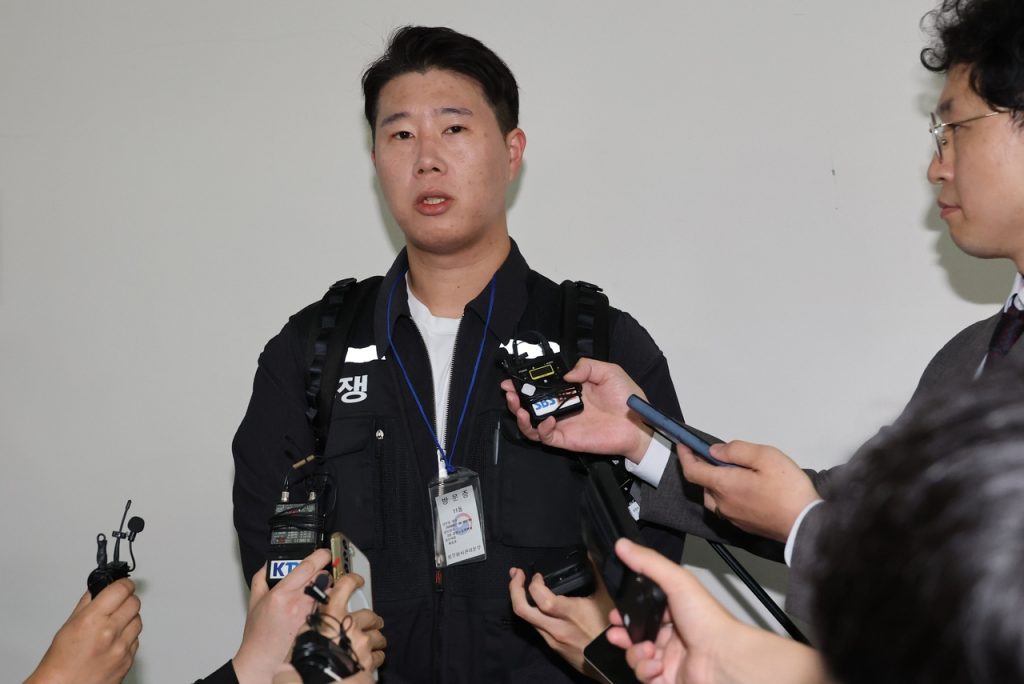
Choi Seung-ho, head of the Samsung Electronics chapter of the Korean Federation of Supra-Enterprise Labor Unions, informed reporters before Tuesday’s session that he aims for “a result that satisfies members, whether through agreement or breakdown.” He reiterated his position as Samsung’s legally recognized employee representative, highlighting the importance of their collective bargaining power.
Conversely, Kim Hyung-ro, the vice president leading Samsung’s negotiating team, opted not to comment upon his arrival.
The core of this protracted labor dispute revolves around the institutionalization of a bonus formula within the collective agreement. The union views codifying this formula as a non-negotiable demand, asserting its importance for employee benefits. In contrast, Samsung management has provided what it calls industry-leading payouts via discretionary special awards, contending that any fixed-percentage structure requires more extensive design and consideration. Crucially, under Korean labor law, post-mediation agreements hold the same legal weight as a formal collective bargaining agreement, elevating the institutionalization of the bonus formula to the central point of contention.
Concurrently, significant external pressure has intensified on both parties to resolve the dispute.
The American Chamber of Commerce (AmCham) in Korea issued a rare public statement on Monday, cautioning that substantial production disruptions at Samsung could significantly “heighten concerns over supply bottlenecks, price volatility, procurement stability, and overall supply chain stability” across global memory markets. James Kim, AmCham Chair and CEO, further emphasized that “consistent efforts to strengthen supply chain reliability, operational stability, and management predictability” are vital for Korea’s long-term global competitiveness, warning against the risk of competing economies seizing displaced market demand.
The chamber’s intervention in specific domestic labor disputes is highly uncommon, highlighting the severity of the potential Samsung strike. Meanwhile, Labor Minister Kim Young-hoon, who actively urged both sides back to the negotiating table, posted on X on Monday, suggesting that “the solution may already be closer than we think.”
Monday’s session marked the first face-to-face meeting between the two sides in 45 days, following the union’s suspension of talks on March 27. Should these critical negotiations fail to produce an agreement, and if the commission is unable to facilitate additional rounds, focus will shift to the Suwon District Court. The court is scheduled to hold a second hearing on Wednesday regarding Samsung’s injunction request to restrict potential strike action, with a ruling anticipated before the May 21 deadline.
Industry estimates suggest that approximately 30,000 to 40,000 of the union’s 73,000 members are prepared to participate should the walkout proceed. Projections indicate that combined losses from production stoppage and the subsequent equipment recovery could exceed 30 trillion won ($20.2 billion) over the 18-day strike period announced by the union, underscoring the severe financial impact on Samsung.
This potential walkout would mark only the second such industrial action in Samsung Electronics’ history, following a smaller-scale 2024 protest that saw limited employee participation.
mjh


