
China’s Silicon Wafer Drive: Samsung, SK Hynix Evaluate Amidst Significant Tech Gap
China is aggressively pursuing silicon wafer self-sufficiency, targeting over 70 percent domestic sourcing of advanced wafers by 2026 to meet surging AI-driven chip demand.
While this ambitious push is not expected to immediately disrupt the global chip industry, experts highlight that it signifies China’s strategic strengthening of a critical layer within the semiconductor supply chain, especially as the AI boom intensifies wafer demand.
Park Jae-geun, a distinguished professor at Hanyang University’s Department of Semiconductor Engineering, commented, “The world’s top five wafer suppliers are unlikely to face an immediate serious threat from China’s growing presence. However, they must maintain their technological lead to keep Chinese rivals in check.”
Historically, the global silicon wafer market has been dominated by a select group of leading suppliers: Japan’s Shin-Etsu Chemical and Sumco, Taiwan’s GlobalWafers, Germany’s Siltronic, and Korea’s SK Siltron.
With global semiconductor demand accelerating due to AI infrastructure investments, Beijing has increasingly urged local chipmakers to adopt domestically produced 12-inch wafers. According to Nikkei Asia, China has effectively imposed an “unspoken mandate” for local wafer use, restricting overseas suppliers to approximately 30 percent of the domestic market.
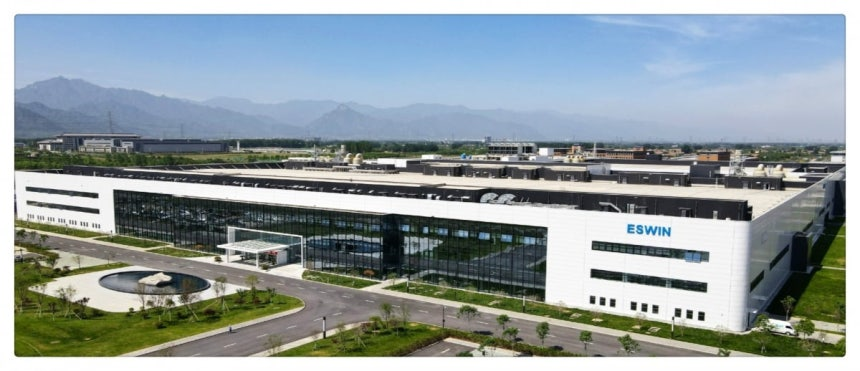
Eswin Material Technology, a prominent Chinese wafer manufacturer, projects its combined production capacity for 12-inch wafers to reach 1.2 million units per month by 2026. This capacity is sufficient to satisfy roughly 40 percent of China’s internal demand and would secure a global market share exceeding 10 percent.
Eswin further stated that it currently supplies wafers to major global clients, including Micron Technology, TSMC, GlobalFoundries, and United Microelectronics Corp. Notably, Samsung Electronics and SK hynix, both operating significant production facilities in China, are also in the process of verifying Eswin’s wafer products.
Despite China’s advancements, experts anticipate that established global wafer makers will retain a substantial competitive edge, particularly in the production of high-end wafers.
Professor Park explained, “Leading companies like TSMC are improbable to utilize Chinese wafers for advanced mass production. They will continue to source prime wafers from their long-standing, established suppliers, which underscores the significant technology gap that still exists.”
Industry insiders echo this sentiment, suggesting that Korean chipmakers might be evaluating Chinese wafers primarily for testing and engineering purposes, rather than for full-scale mass production.
Prime wafers are defined as top-grade, device-quality silicon wafers, meticulously manufactured to stringent specifications for commercial chip production. In contrast, test wafers are more cost-effective alternatives used mainly for engineering, process calibration, and quality monitoring.
As China scales up its wafer supply chain capabilities, concerns are simultaneously rising about potential wafer shortages driven by the escalating demand from the AI sector.
Samsung procures its wafers from a diverse range of suppliers, including Siltronic and SK Siltron. Similarly, SK hynix sources its wafers from manufacturers with production facilities spanning South Korea, Japan, Germany, and the US.
Chey Tae-won, chairman of SK Group, has attributed current shortages in high-bandwidth memory (HBM) largely to constraints in wafer supply.
He emphasized the challenge, stating, “It requires at least four to five years to secure additional wafer capacity,” and warned that industrywide HBM shortages could potentially persist through 2030.
Data released by the industry association SEMI on May 7 revealed that global silicon wafer shipments reached 3.28 billion square inches in the first quarter, marking a robust 13.1 percent increase year-over-year.
The semiconductor industry anticipates a continued upward trend in wafer shipments as competition among major chipmakers intensifies. SEMI forecasts that global wafer shipments will achieve a record 15.49 billion square inches by 2028, propelled by the expansion of AI data center construction and growing demand for edge computing technologies.
China’s localization drive for wafers is also viewed as a crucial strategic maneuver to bolster supply chain resilience, preparing for potential future US trade restrictions.
A recent US Chamber of Commerce report, “China’s Next-Generation Industrial Policy,” released Monday, highlighted that Beijing’s current policy frameworks comprehensively cover mature industries, foundational supply chain nodes, and frontier technologies.
The report concluded, “Even in mature industries facing overcapacity and intense price pressures, Beijing continues to provide support, pushing firms to upgrade production technologies to gain market share and lower production costs, rather than reducing capacity.”


