
Government to sell 1 trillion won NXC stake, expects tax revenue and FX inflows
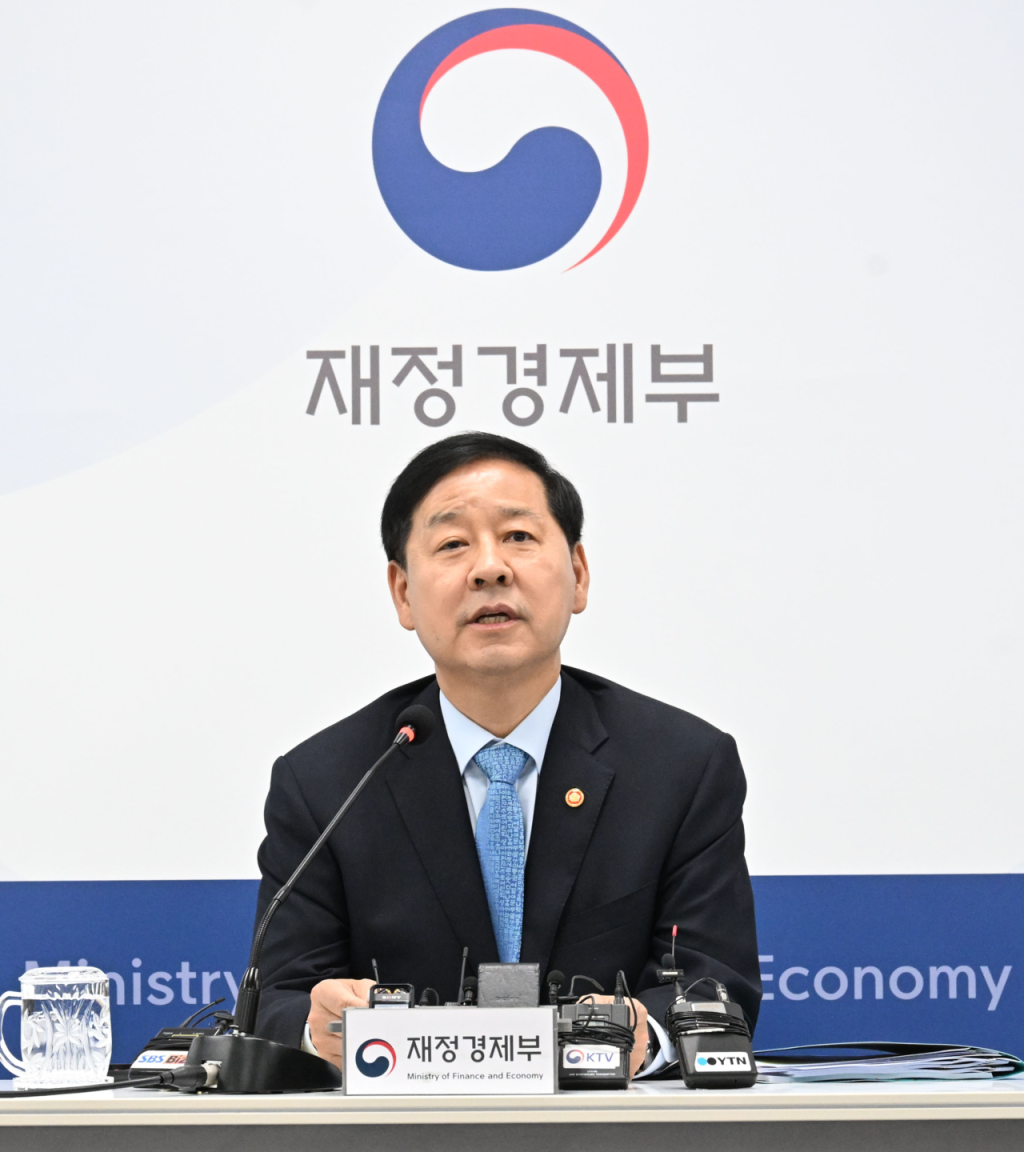
South Korea’s economy is poised for robust growth exceeding 2 percent this year, even amidst prevailing macroeconomic and geopolitical uncertainties, Minister of Economy and Finance Koo Yun-cheol announced Monday. He also highlighted that local stocks remain notably undervalued, despite a recent record-setting rally.
“We project economic growth this year to comfortably surpass 2 percent. The final figure will largely hinge on factors like the strength of the ongoing semiconductor boom and the evolving impact of the Middle East conflict,” Koo stated during a press briefing in Sejong. He added that the government plans to release a more specific forecast as part of its second-half economic strategy, anticipated in late June.
This optimistic outlook follows an impressive first-quarter performance, where Asia’s fourth-largest economy expanded by a stronger-than-expected 1.7 percent. This positive surprise has led to a wave of economic forecast upgrades, with many domestic and global institutions now projecting figures at or above the government’s 2 percent target.
Koo emphasized a record current account surplus in the first quarter, nearly doubling the previous quarterly high of $39.2 billion set in the fourth quarter of 2025. This surge was primarily driven by continued record-breaking exports, particularly in semiconductors and other key strategic products.
Nonetheless, he identified inflation as a critical risk, citing persistent pressure from elevated oil prices exacerbated by the Middle East war.
“The government is prioritizing inflation control, extending these efforts to include active management of the property market,” he affirmed, while also acknowledging the inherent uncertainties surrounding the semiconductor cycle and the trajectory of the ongoing conflict.
Addressing concerns about potential overheating, the minister defended the Kospi’s rally as “a market-driven outcome” that strongly reflects global investors’ unwavering confidence in Korean equities. The benchmark index achieved a new milestone Monday, topping 7,800 for the first time, just three sessions after breaking the 7,000 mark.
“Based on fundamental price-to-book ratios, South Korea’s stock market continues to be undervalued when compared to those in advanced economies,” he explained. “Considering the exceptional operating profits from industry giants like Samsung Electronics and SK hynix, coupled with the robust AI-driven semiconductor cycle, this rally possesses substantial underlying strength.”
In a separate development, Koo confirmed that the government will sell a portion of its stake in NXC Corp., the esteemed holding company of game developer Nexon, back to the company. This marks the government’s initial successful partial exit after multiple previous attempts to offload the shares through block sales proved unsuccessful.
The ministry initially acquired approximately 852,000 shares, representing roughly 30 percent of NXC, from the family of the late Nexon founder Kim Jung-ju in February 2023. These shares served as an in-kind payment for inheritance tax, valued at about 4.7 trillion won ($3.19 billion) at the time. However, four rounds of public bidding failed due to the minority stake carrying a control premium, despite offering limited influence against the founding family’s dominant 68 percent holding.
“The shares were initially valued at 5.534 million won each when the government accepted them as a tax payment in kind. We are now successfully selling them at a higher price of 5.558 million won per share,” Koo elaborated. “From the government’s perspective, this transaction represents a highly successful sale.”
NXC is set to acquire 1.02 trillion won worth of these shares in June and will immediately cancel them, as stated by the ministry. This transaction will reduce the government’s stake from 30.6 percent to 25.7 percent.
Minister Koo emphasized that this strategic sale will secure over 1 trillion won in crucial tax revenue, significantly aiding fiscal management and alleviating pressure on government bond issuance. Furthermore, NXC is expected to attract substantial overseas capital for this purchase, thereby boosting foreign currency inflows and enhancing overall foreign exchange market stability, he concluded.
jwc


