
European EV Battery Market Heats Up: Korean Giants Defend Lead Against CATL’s Aggressive Expansion
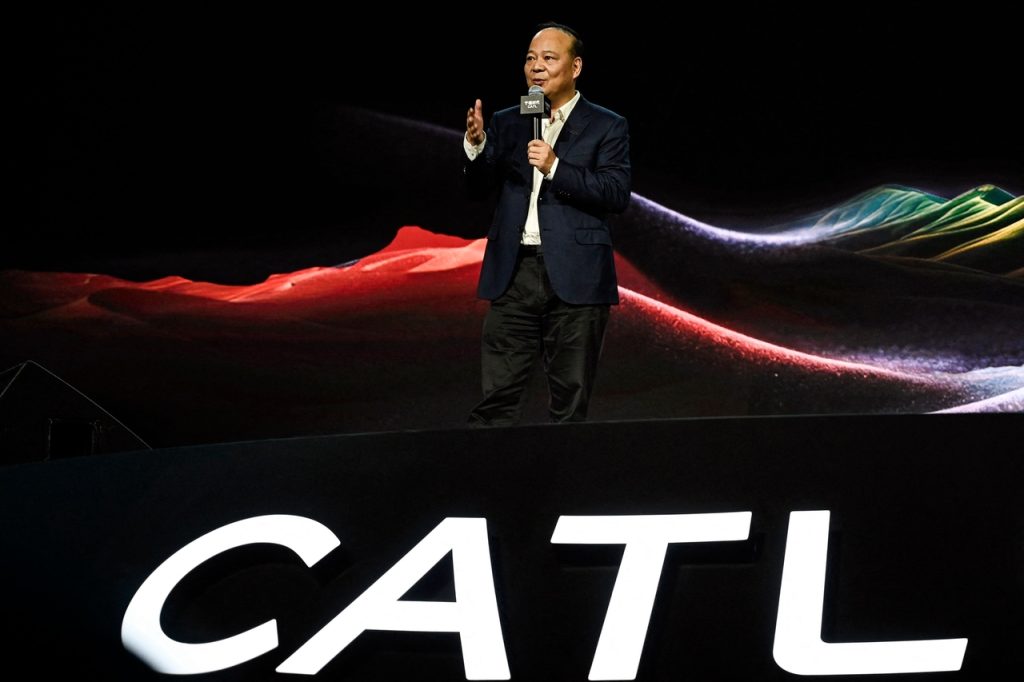
CATL, the global leader in electric vehicle (EV) battery manufacturing, is intensifying its focus on the European market following a successful $5 billion fundraising in Hong Kong. This strategic pivot to Europe comes as stringent US restrictions limit its American presence and China’s domestic market faces oversupply challenges. The move highlights Europe’s critical importance as a growth region for battery manufacturers, even amidst increasing regulatory complexities.
Simultaneously, major Korean battery manufacturers are keenly focused on Europe, where electric vehicle demand is exhibiting a promising, albeit gradual, rebound, contrasting with the slower recovery observed in the US market. As these two powerful forces collide in the European battery sector, a key question emerges: can Korean companies maintain their competitive edge against the formidable Chinese giant dominating the global battery landscape?
CATL’s recent fundraising event marked Hong Kong’s largest equity offering this year and its most significant since the company’s own $5.25 billion listing last year, according to Reuters, citing London Stock Exchange Group data.
The company has outlined plans to strategically deploy these proceeds, focusing on expanding its overseas production capabilities, strengthening its research and development initiatives, investing in vital zero-carbon projects, and bolstering overall operational support.
Under its dedicated “In Europe, for Europe” strategy, CATL anticipates allocating approximately 90 percent of the raised capital to its ambitious battery plant project in Debrecen, Hungary. This facility is poised to become its primary European manufacturing hub.
Operations at the Debrecen facility are slated to commence this year, beginning with an initial annual capacity of around 40 gigawatt-hours (GWh) before steadily scaling up to a formidable 100 GWh. This will solidify its position as CATL’s second major European production base, complementing its existing plant in Germany.
This aggressive expansion underscores a broader strategic reorientation. With Washington implementing tighter restrictions on Chinese battery supply chains, Europe has indisputably emerged as the most crucial overseas growth market for CATL and other prominent Chinese battery manufacturers.
Navigating Europe’s Evolving Battery Regulations: A Distinct Approach from the US
CATL’s accelerated expansion into Europe occurs even as the European Union tightens its industrial policy under the Industrial Acceleration Act (IAA). This act aims to bolster local supply chains and mitigate dependence on external sources, particularly China.
Nevertheless, industry experts emphasize that Europe’s regulatory framework differs fundamentally from that of the US. In the United States, Chinese battery manufacturers face significantly stricter subsidy qualifications and sourcing restrictions.
“The IAA is primarily focused on enhancing local industrial resilience rather than enforcing de facto exclusion, which is characteristic of the US measures,” explained Kim Tae-hwang, an international trade professor at Myongji University.
Professor Kim noted that CATL’s large-scale Hungary project could still attract considerable scrutiny due to its sheer size, China’s dominant position in global battery production, and the plant’s wholly-owned structure rather than a joint venture with European partners.
These evolving regulations could exert pressure on CATL to deepen its localization efforts through increased local hiring, substantial R&D investments, and strategic technology sharing. However, because the measures primarily target public procurement and government subsidies rather than the broader private EV market, CATL appears confident in its ability to expand through localized production, according to Kim.
In a clear reflection of Europe’s push for localization, CATL previously stated that 75 percent of the hires for its Debrecen plant would be recruited from within a 60-kilometer radius of the facility.
Korean Battery Giants Leverage Early European Market Presence
Korean battery manufacturers are actively working to reinforce their established early manufacturing lead in Europe as electric vehicle production gradually regains momentum.
LG Energy Solution currently boasts an impressive annual production capacity of approximately 80 gigawatt-hours (GWh) in Poland. Concurrently, Samsung SDI and SK On operate significant plants in Hungary, with capacities of 40 GWh and 47.5 GWh, respectively.
Among these three, SK On’s Hungary plant has demonstrated the most robust recovery, with utilization rates climbing into the mid-80 percent range. Industry officials attribute this notable rebound to strong Volkswagen sales across Europe, an increase in skilled engineering talent, and optimized equipment performance.
CATL’s market entry could intensify competition by supplying more cost-effective batteries for compact EVs. This segment represents one of Europe’s fastest-growing markets and is an area where Korean companies entered relatively later.
However, industry officials suggest that CATL’s cost advantage may diminish in Europe. Localized production inherently raises manufacturing and logistics costs significantly.
“CATL may encounter challenges in achieving a stable ramp-up in Europe, where it does not possess the same pricing edge as in China due to inherently higher production and logistics costs,” an anonymous industry source commented.
According to SNE Research, Chinese battery manufacturers face a substantial 10 to 20 percent increase in production costs when establishing manufacturing operations in Europe. This potentially narrows the existing cost gap with their Korean rivals. Additionally, high upfront investment costs and initial-stage yield losses are anticipated to place further pressure on profitability.
Energy Storage Systems (ESS): The Next Frontier for European Battery Competition
Industry experts predict that competition will intensify even further within Europe’s burgeoning energy storage systems (ESS) market.
“Having capitalized on its battery dominance, transitioning from smartphones to EVs, China will likely pivot strategically toward Europe’s ESS market as escalating trade barriers effectively shut CATL and other Chinese firms out of the US,” stated a researcher from a prominent Korean battery firm.
Although Europe’s ESS market currently remains smaller than that of the US, its long-term growth potential is projected to surpass the American market. A report by Eugene Investment & Securities forecasts Europe’s battery ESS market to expand dramatically from 30 gigawatt-hours (GWh) in 2025 to an impressive 135 GWh by 2030. In contrast, US growth over the same period is expected to rise from 48 GWh to 113 GWh.
The researcher further emphasized that Europe’s ESS sector could ultimately favor Korean firms. This is primarily because large-scale energy storage projects heavily rely on public subsidies and government bidding programs, where strict EU localization requirements carry significantly greater weight.
“Without fulfilling European requirements for local ownership and sourcing, CATL could face significant restrictions in securing major utility-scale ESS projects. Korean battery-makers, which already have established manufacturing bases across Europe, are considered better positioned to meet those standards and compete effectively for subsidized contracts,” he concluded.
hyejin2


