
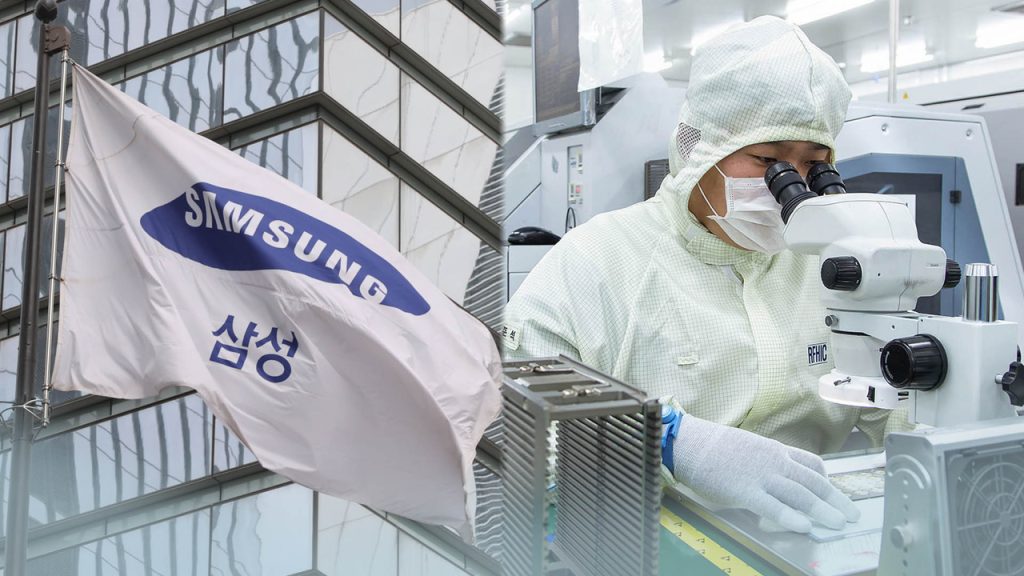
Bonus fight tests pride of working for one of Korea’s most coveted employers
For a Samsung Electronics engineer, the “core talent” contract once symbolized the company’s commitment and his value. It served as a clear indicator that Samsung acknowledged its irreplaceable engineers and intended to reward them accordingly, with the additional compensation reinforcing this belief.
However, this long-held trust has significantly eroded. “Observing Samsung’s recent handling of the bonus dispute, my allegiance to the company has waned considerably,” stated an employee, who requested anonymity due to speaking without authorization. “I’m now exploring the feasibility of transitioning to SK Hynix and evaluating Samsung’s potential efforts to impede such a move.”
The engineer detailed how his specialized contract prohibits him from joining industry competitors, including chip rivals like SK Hynix and tech giants such as Apple and Google, for two years post-departure. Under his CL3-grade agreement, Samsung previously offered approximately 50 million won ($34,200) in retention pay over two years. This year’s revised offer stands at 80 million won over three years, partially in company stock.
“What I once accepted with gratitude now feels akin to a restrictive contract,” he lamented.
While this individual case represents a fraction of Samsung’s vast workforce, it underscores why the ongoing bonus disagreement within the company transcends a mere demand for higher wages.
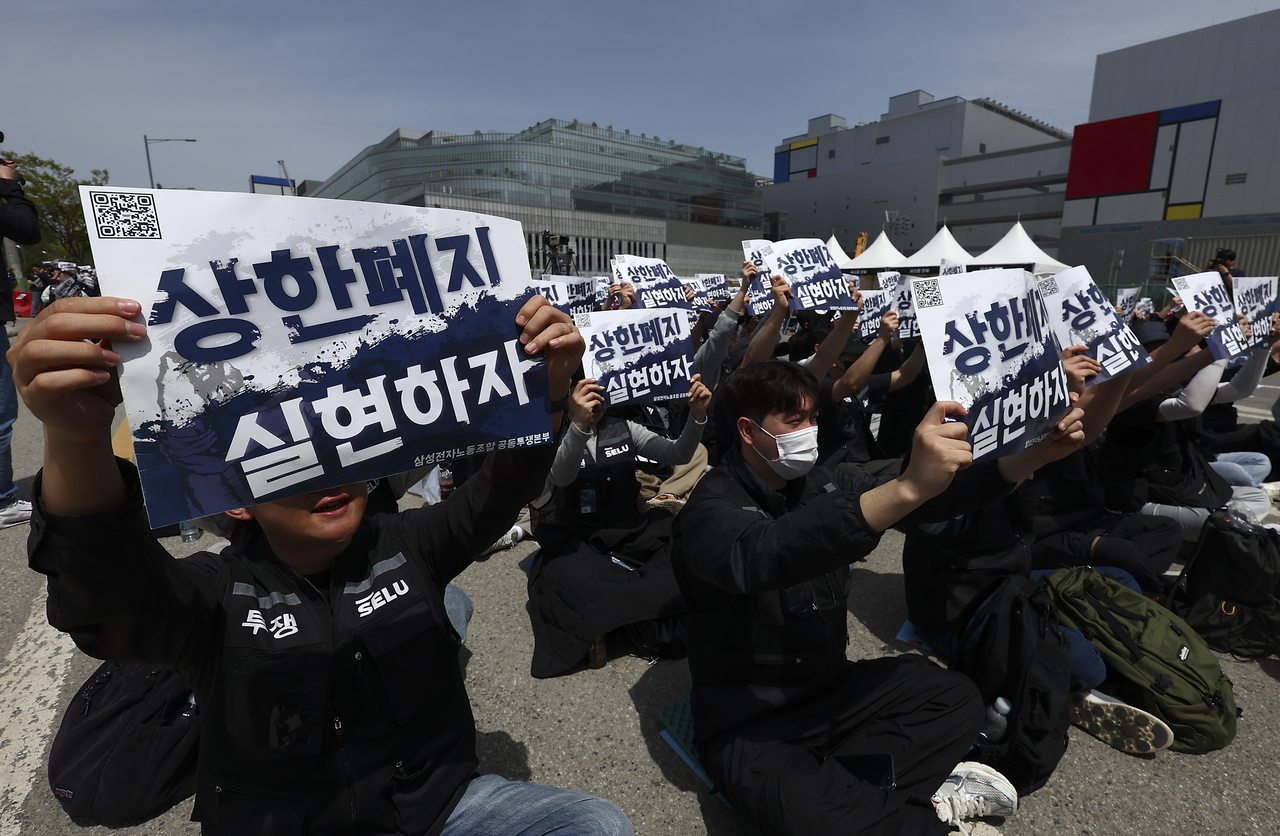
In recent weeks, the Samsung Electronics union has intensified its demands for bonuses to constitute 15 percent of the company’s operating profit, alongside the elimination of the existing bonus cap. Samsung reported a robust 57.2 trillion won in operating profit during the first quarter, with its semiconductor business contributing nearly 90 percent of this figure. Industry forecasts anticipate a full-year operating profit around 340 trillion won.
The escalating tension culminated on April 23, when nearly 40,000 workers, representing almost one-third of Samsung’s domestic workforce, convened near the company’s Pyeongtaek chip complex in Gyeonggi Province. Should negotiations falter, the union has issued a warning of an 18-day strike commencing May 21.
Beyond Samsung’s internal perspective, many Koreans are primarily focused on the financial implications. Local media suggest the union’s proposed bonus structure could generate a bonus pool exceeding 40 trillion won, potentially allowing some employees in the memory division to receive hundreds of millions of won individually.
However, interviews conducted by The Korea Herald reveal a more profound issue than a simple pay raise disagreement: Samsung engineers, who once patiently awaited company-driven improvements, are now critically evaluating the wisdom of continued loyalty.
A Ph.D.-level researcher specializing in advanced DRAM process development, hired under a “core talent” arrangement, highlighted the pervasive sentiment: “I contribute to what I consider the absolute core of Samsung’s memory business. Even within this critical area, over 80 percent of employees have now joined the union.”
For years, he explained, many colleagues endured, motivated by retention pay and smaller incentives, holding onto hope for internal changes. However, following recent negotiations, he noted, “Many individuals around me are actively considering opportunities at SK Hynix or preparing for career transitions.”
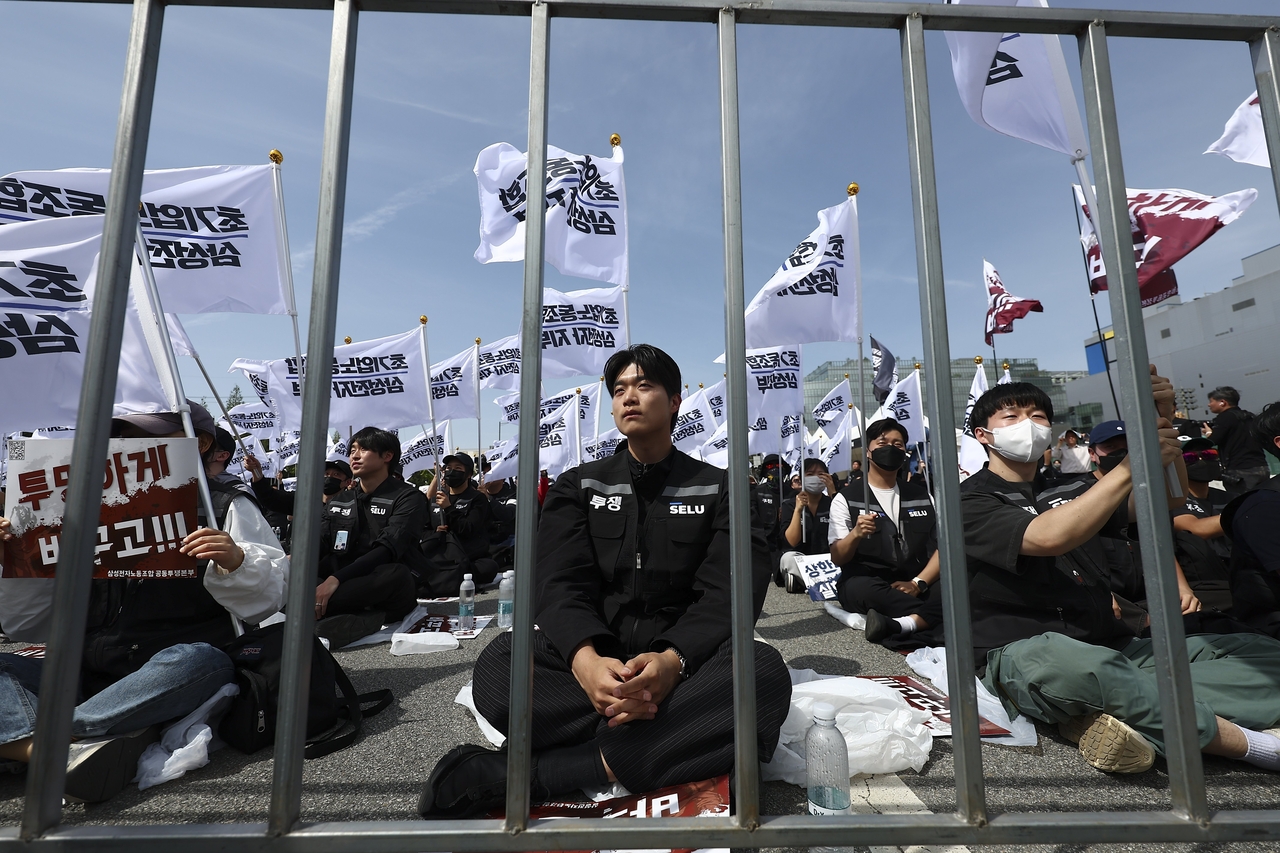
Another researcher at Samsung’s semiconductor research center remarked on the unprecedented surge in union membership, a development unfathomable within Samsung just a few years prior. Historically, many engineers, particularly younger generations, expressed caution or even animosity towards organized labor and politically aligned unions.
“This was not a demographic naturally inclined towards unionization,” he clarified. “A significant number of younger engineers harbored skepticism, even outright hostility, toward unions.”
Yet, over time, numerous researchers recognized their individual lack of bargaining power. Despite their critical work on core chip technology, research staff bonuses hovered at approximately 70 percent of the memory division’s levels. In some instances, bachelor’s- and master’s-level researchers at the semiconductor research center received substantially smaller bonuses than memory division employees without university degrees, with discrepancies sometimes amounting to tens of millions of won.
“Operating as isolated individuals diminishes our influence,” the researcher asserted. “We risk being overlooked.”
An employee specializing in high bandwidth memory (HBM) mass production underscored a different, yet crucial, aspect. Samsung’s immense chip profits, he contended, are not solely attributable to a handful of “star developers,” but rather to the synchronized efforts of integrated development, production, equipment, quality, and yield teams.
Ultimately, he argued, employees seek “a transparent, consistent, and trustworthy compensation framework for everyone,” rather than episodic, temporary bonus payouts.
Samsung employees consistently draw comparisons to SK Hynix, whose uncapped 10 percent profit-linked bonus structure has become the benchmark they now expect Samsung to emulate. This shift is particularly remarkable, given that SK Hynix historically operated in Samsung’s shadow, rather than serving as a reference point for Samsung engineers.
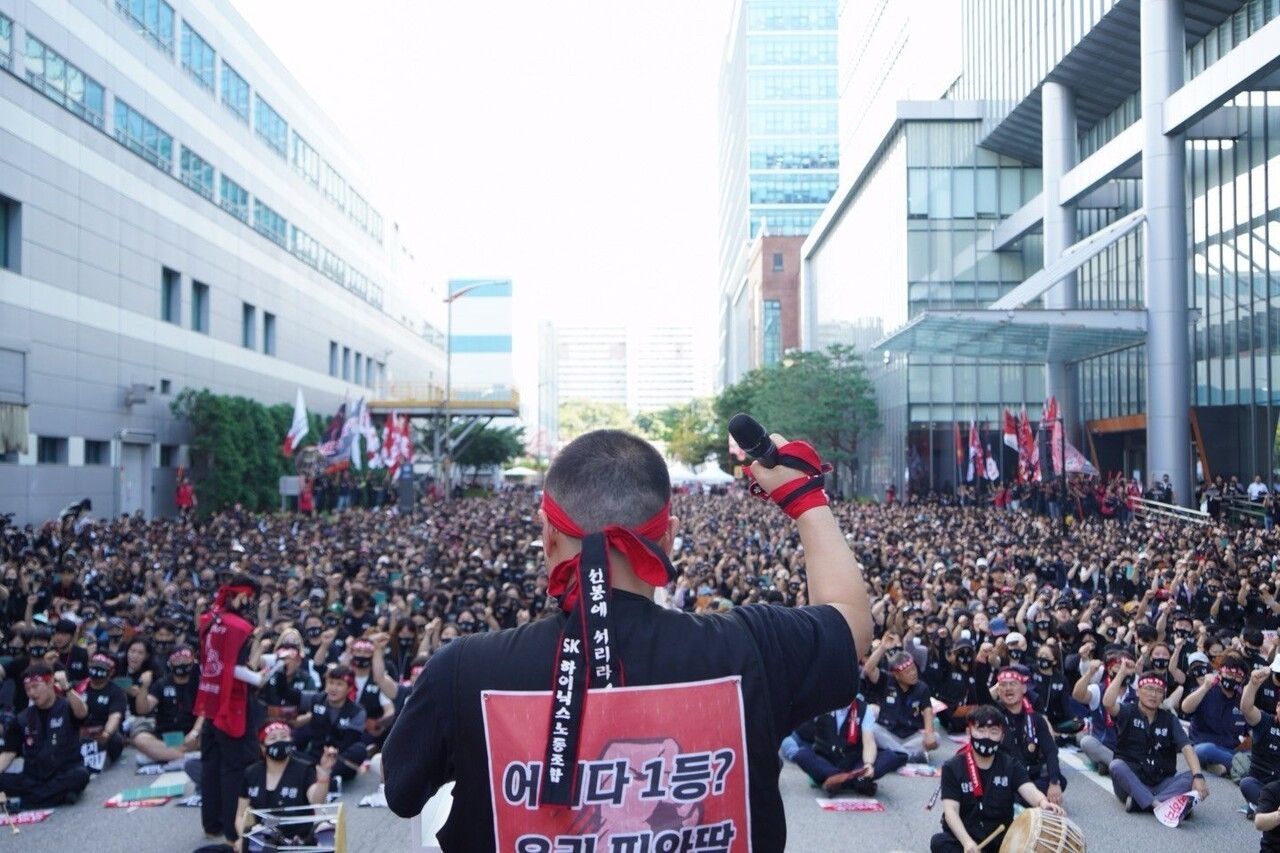
However, the SK Hynix compensation model isn’t a straightforward fit for Samsung’s diversified operations.
While SK Hynix primarily specializes in memory chip production, Samsung manages extensive foundry and device manufacturing divisions. Consequently, over 2,500 members recently disassociated from Samsung’s largest union, citing objections to what they perceived as memory-centric demands and increased union dues that offered minimal benefit to employees in device-related sectors.
“From an external perspective, Samsung Electronics might appear unified,” another employee observed. “Internally, however, the focus feels heavily skewed towards the memory business.”
Oh Gye-taek, head of the labor relations research division at the Korea Labor Institute, pointed out a growing disparity in momentum between Korean workers and their employers. “Employees are gravitating towards an American-style flexible job market, actively seeking new opportunities or aggressively negotiating for superior compensation,” Oh explained. “Conversely, companies largely adhere to Japanese-style expectations of unwavering loyalty. This fundamental gap fuels the current conflict.”
At Samsung, this misalignment resonates more profoundly, as the company has historically been more than just another employer in Korea. A career at Samsung has long been synonymous with national pride, representing affiliation with the country’s preeminent export champion. The prospect of losing highly skilled engineers to SK Hynix—or witnessing SK Hynix emerge as the more appealing employer—significantly challenges this deeply ingrained corporate identity.
“People often question why we don’t simply depart for SK Hynix,” a Samsung employee shared. “Yet, many of us retain a strong affection for Samsung. Our desire isn’t to leave; it’s for the company to evolve into a place truly worth staying for.”
mjh


