South Korean airlines, particularly low-cost carriers (LCCs), are implementing significant flight reductions and emergency measures in response to surging jet fuel prices driven by ongoing Middle East tensions. Industry officials confirmed Sunday that nearly 900 round-trip flights have already been cut, with more reductions anticipated.
These widespread flight cancellations directly stem from a sharp increase in jet fuel costs following the US-Iran conflict. As several airlines are still finalizing their June flight schedules, the total number of affected flights is expected to rise further, according to industry reports.
Jeju Air, South Korea’s largest budget airline, has notably scaled back its international operations. The carrier plans to cut 187 round-trip international flights – representing 4 percent of its total operations – on key routes from Incheon, west of Seoul, to popular destinations such as Bangkok, Singapore, and the Vietnamese cities of Da Nang and Phu Quoc throughout May and June. Furthermore, Jeju Air has suspended its Vientiane route for a two-month period since late April.
Another prominent low-cost carrier, Jin Air, has also announced substantial flight reductions, canceling 176 round-trip services to destinations including Guam and Phu Quoc, effective until the end of this month. Additional cuts are anticipated once the airline’s June schedule is finalized to manage operational costs.
Full-service airlines are not immune to the crisis. Asiana Airlines Inc. has already reduced 27 round-trip flights across six international routes, including Phnom Penh and Istanbul, with these adjustments planned through July in light of the Middle East conflict’s impact on fuel expenses.
Meanwhile, Korean Air Co., South Korea’s flagship and largest carrier, has not yet made adjustments to its flight operations. However, the airline stated it is closely monitoring the volatile situation under an intensified emergency management system to prepare for potential impacts.
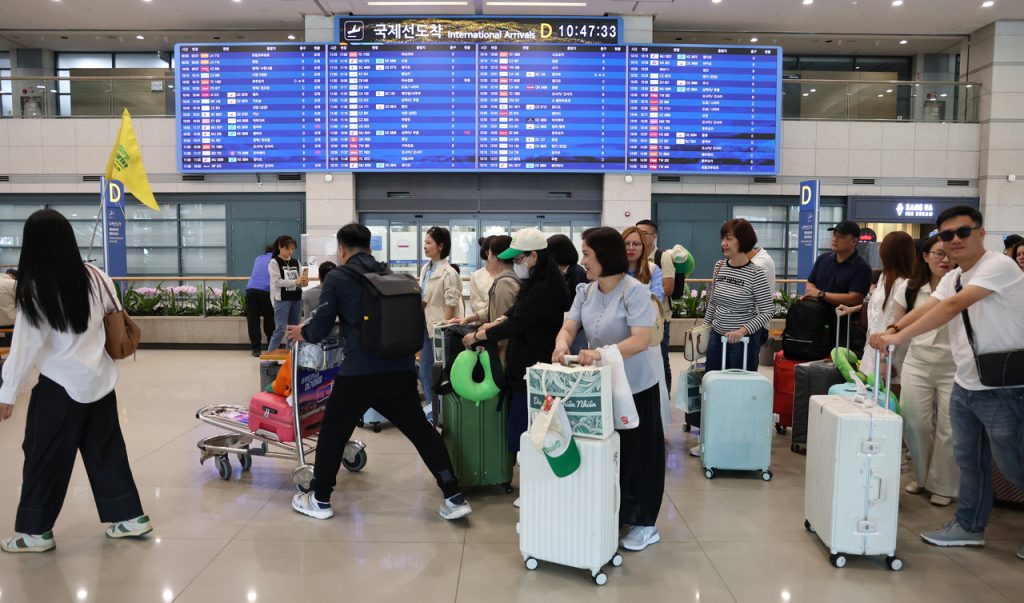
“Travel demand for medium- and long-haul international routes has significantly weakened, largely due to the increasing financial burden placed on passengers by escalating fuel surcharges,” an airline official commented, highlighting the direct consumer impact.
Another industry expert pointed out that some Southeast Asian flight routes now necessitate additional refueling stops, a costly operational challenge further compounded by the sharply higher global fuel prices.
The price of jet fuel has experienced a staggering surge, increasing 2.5 times since the initial outbreak of the conflict.
Specifically, the average Singapore jet fuel price – a crucial benchmark for determining airline fuel surcharges – reached $214.71 per barrel between March 16 and April 15. This represents a substantial 150 percent increase compared to just two months prior, underscoring the severity of the cost pressures faced by airlines.
Amid these worsening business conditions, major South Korean airlines including Korean Air, Asiana Airlines, Jin Air, and T’way Air Co. have all activated various emergency management measures to mitigate financial risks.
To manage costs, T’way Air and Jeju Air have introduced unpaid leave programs for employees. Similarly, Jin Air has taken steps to conserve capital by postponing safety incentive payments to its staff.
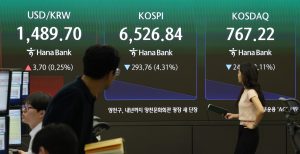
Despite reporting robust earnings in the first quarter, analysts predict that many Korean airlines are likely to face financial losses in the second quarter. This downturn is attributed to the combined effects of soaring oil prices, a noticeable decline in travel demand, and a weakening Korean won against major currencies.
Budget airlines, due to their inherently weaker financial positions compared to major full-service carriers, are particularly vulnerable to these challenging market conditions.
T’way Air, for instance, is already grappling with a severe cash crunch, having reported consecutive losses for the past two years, with its debt ratio soaring to over 3,400 percent as of the end of 2025.