

South Korea’s Stock Market Gains Fuel Real Estate, Stifling Consumer Spending: Bank of Korea Report
A recent report from the Bank of Korea (BOK) reveals that South Korean households channel the vast majority of their stock market profits into real estate investments, significantly limiting overall consumer spending. According to findings released Thursday, out of every 10,000 won ($0.09) gained from stock investments, only about 130 won ($0.09) translates into expenditure on goods and services.
Macroeconomic analysts at the central bank indicate that this consumption rate for capital gains from stocks stands at a mere 1.3 percent. This figure starkly contrasts the 3-4 percent typically observed in major economies like the US and Europe, highlighting a challenge for South Korea’s domestic consumption growth.
The BOK report specifically highlights that a substantial portion of these stock investment gains is directly redirected into the real estate market, thereby restricting the potential for broader consumer expenditures. Notably, among households that do not own homes, an estimated 70 percent of their stock-related capital gains were utilized for real estate acquisition. Furthermore, recent data for home purchases in Seoul demonstrate an increasing trend of buyers liquidating stock holdings to finance their housing investments.
Analysts also attribute this subdued consumption rate to several structural factors within the South Korean economy. These include a relatively concentrated investor base, along with the domestic stock market’s historically lower profitability and higher volatility compared to international benchmarks.
In 2024, South Korean households’ stock holdings represented 77 percent of their disposable income. This figure remains considerably lower than levels in the US (256 percent) and major European economies (184 percent), indicating a less widespread engagement in the stock market. Moreover, stock ownership in South Korea is predominantly concentrated among high-income households, whose spending habits are generally less influenced by fluctuations in stock prices, further dampening the impact on overall consumption.
The report also underscored the South Korean stock market’s comparatively weak returns and pronounced volatility. Between 2011 and 2024, the expected returns from South Korea’s stock market were approximately one-sixth of those in the US market. This makes it less likely for households to perceive stock gains as a reliable and stable source of income for everyday expenditures.
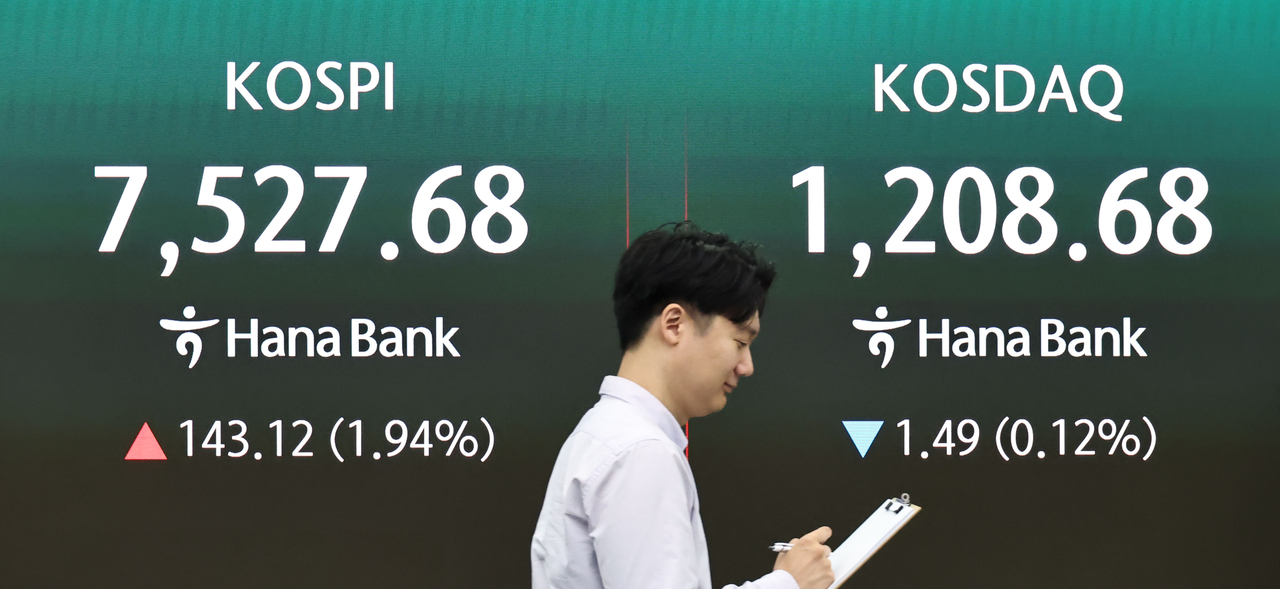
Despite these challenges, BOK analysts observe a gradual improvement in the South Korean stock market environment. They note that the burgeoning global demand for artificial intelligence (AI) has significantly boosted stock indices, leading to increased stock holdings, better expected returns, and a diversification of market participants.
Nevertheless, a note of caution was issued, advising investors to remain vigilant for sudden market shifts that could impact indices. Ultimately, the analysts underscored the critical need for a more stable stock market, emphasizing that achieving this stability largely hinges on the successful stabilization of real estate prices across South Korea. This interconnected dynamic between stock performance and property values remains a key area of focus for economic policymakers.
shwang9


