
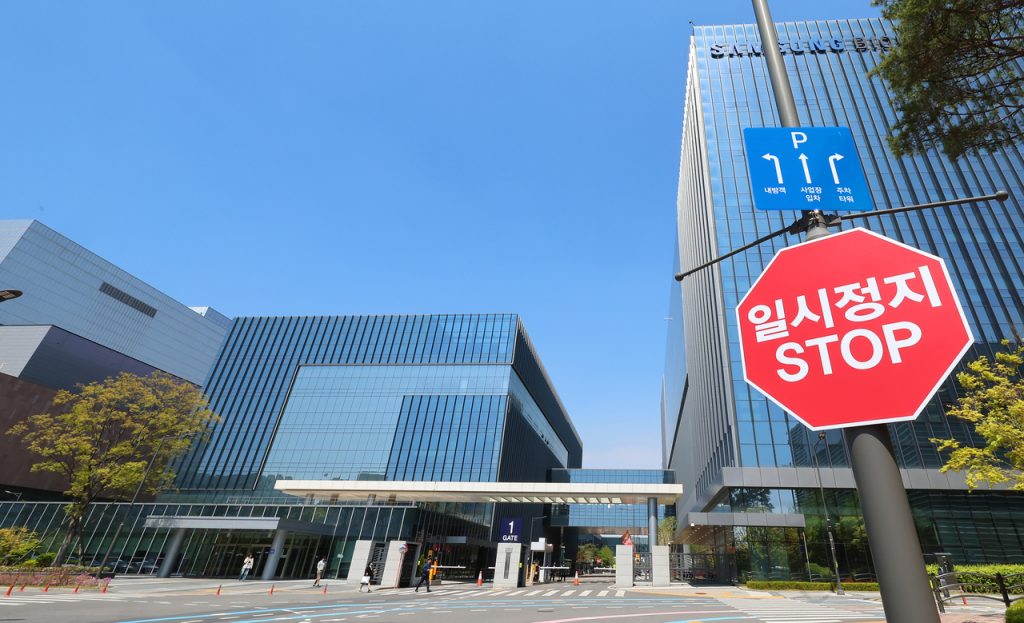
Samsung Biologics Faces Estimated W800 Billion Losses Amid Historic Labor Strike
Government-mediated talks aimed at resolving the unprecedented full-scale strike at Samsung Biologics concluded Monday without a breakthrough, as the CDMO giant and its labor union remained deeply divided.
Meetings held by the Ministry of Employment and Labor, which began at 10 a.m., saw representatives from both management and the union unable to reach an agreement. After an unproductive morning session, discussions resumed in the afternoon but also failed to yield progress by press time.
The labor union stated that company management insisted on an immediate cessation of all strike activities but failed to present any concrete proposals. Furthermore, the union criticized Samsung Biologics for the absence of crucial decision-makers, noting that senior executives, including the CEO and HR head, were not present at the mediation table.
In a firm statement, the labor union asserted, “Considering the graveness of the current situation, the decision-making power and responsibility between both sides’ participants are not on the same level.”
They added, “Unless the management presents practical offers and decision makers, today’s conversation alone will not end this situation.”
The labor union confirmed its intention to continue the five-day walkout until Tuesday, after which it plans to transition to a “work-to-rule” protest to remain within legal boundaries. Approximately 2,800 employees, representing over half of Samsung Biologics’ total workforce, have actively participated in the full strike since Friday, according to the union.
Meanwhile, financial losses are rapidly escalating for the global CDMO leader, Samsung Biologics. This challenging period contrasts sharply with the company’s recent rapid expansion in contract-based businesses, driven by surging worldwide demand for biopharmaceutical manufacturing orders.
Samsung Biologics estimates that the ongoing five-day full strike alone will incur losses of at least 640 billion won ($435 million). This staggering figure is projected to surpass its entire operating profit of 580.8 billion won recorded in the first quarter of this year.
Earlier, Samsung Biologics reported that a three-day partial strike by the labor union last week, from Tuesday to Thursday, already led to losses of 150 billion won. This was attributed to unavoidable production stoppages in critical batches, including those for cancer and HIV treatments, highlighting the severe impact on patient care.
Despite its current labor challenges, Samsung Biologics achieved record-breaking financial performance last year, with sales reaching 4.56 trillion won and operating profit hitting an unprecedented 2.07 trillion won. This represents remarkable growth of approximately fourfold and sevenfold, respectively, compared to its 2020 figures.
This current walkout marks the very first labor strike in Samsung Biologics’ history since its establishment in 2011. The breakdown of mediation on March 23 followed an extensive 13 rounds of negotiations and two direct meetings involving the CEO, yet management and the union failed to find common ground.
The Samsung Biologics labor union’s demands include a substantial 14 percent average wage increase, a 30 million won cash payout for each worker, and a bonus equivalent to 20 percent of the company’s operating profit. Conversely, Samsung Biologics management has deemed these requests “unrealistic,” citing concerns over the company’s capacity to meet such payments and simultaneously secure vital financial resources for future growth and investment.
Vowing to restore stability and peace to the workplace, Samsung Biologics affirmed its commitment to implementing all necessary measures to minimize ongoing damages to its valued clients and mitigate potential future financial losses.
hwkan


