
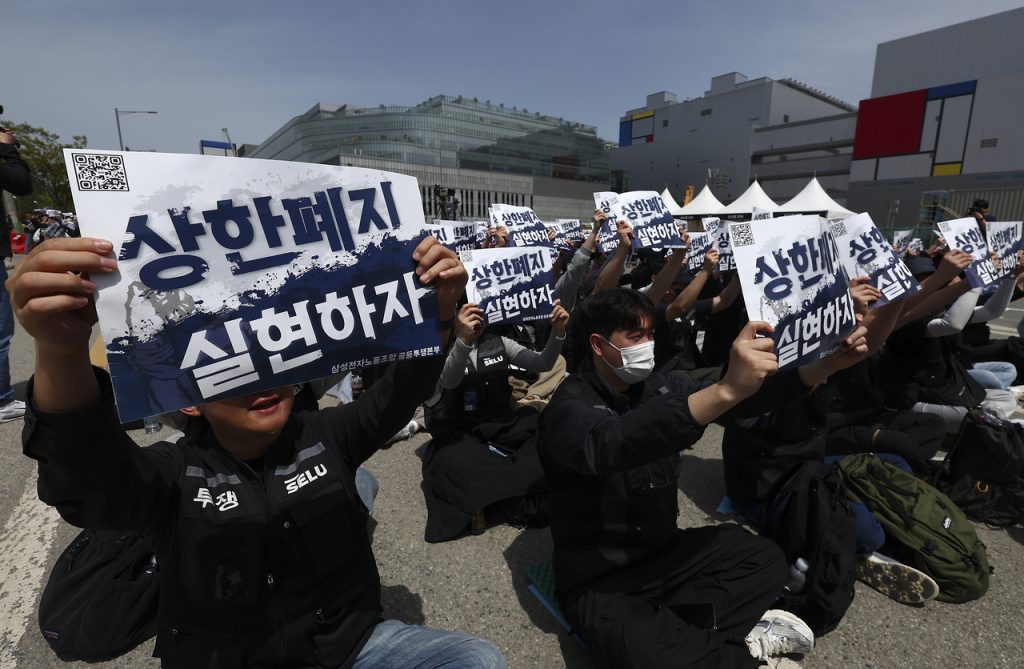
Samsung Electronics Strike Looms: Realmeter Poll Reveals Widespread Opposition to Planned 18-Day Walkout Amid Shareholder Legal Threats
With just three weeks remaining until Samsung Electronics’ largest union intends to initiate an 18-day strike, potentially halting the world’s largest memory chip production, the contentious labor dispute is rapidly extending its impact beyond the company’s immediate operations.
Multiple critical factors are converging against the proposed Samsung strike. The Suwon District Court has scheduled its crucial ruling on Samsung’s injunction request between May 13 and 20, meaning a decision could arrive mere days before the planned walkout. Adding to the pressure, a recent Realmeter poll indicates that a significant 69.3 percent of South Koreans view the impending strike as inappropriate. Furthermore, a vocal shareholder activist has staged a protest outside the courthouse, threatening dual lawsuits against both Samsung’s management and its union if the strike disrupts critical business operations.
According to the Realmeter survey, only 18.5 percent of respondents considered the Samsung Electronics strike a legitimate exercise of workers’ rights. The automated phone survey, conducted from April 27-28, polled 1,000 adults and was commissioned by the industry-focused Energy Economy Daily. While its 4.6 percent response rate typically skews towards individuals with stronger opinions, the widespread opposition highlights significant public concern over the potential impact on South Korea’s economy.
Notably, opposition to the Samsung union strike exceeded 60 percent across all surveyed regions and age demographics, soaring to 80.7 percent in Gwangju and the North and South Jeolla provinces, underscoring broad public apprehension regarding the industrial action.
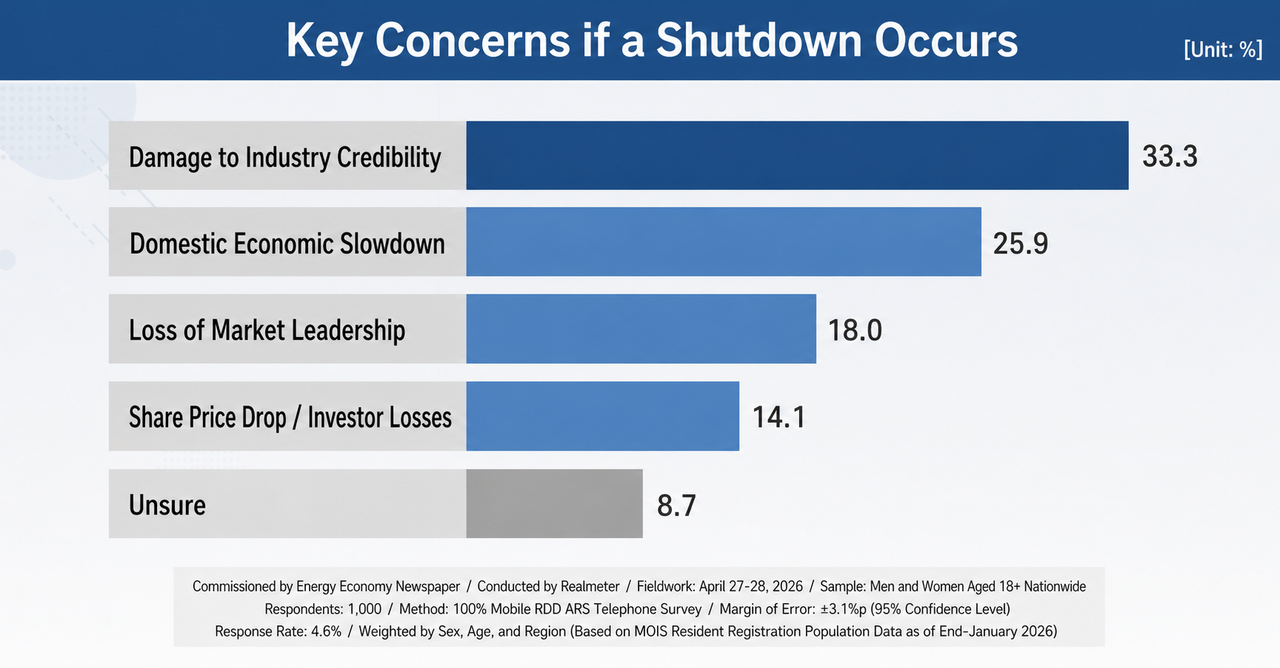
When questioned about their primary concerns regarding a potential Samsung shutdown, 33.3 percent of respondents cited damage to South Korea’s crucial chip industry reputation. Another 25.9 percent expressed worries about ripple effects on integral parts suppliers and the broader national economy, emphasizing the profound economic implications of any disruption.
The financial figures at the heart of this Samsung labor dispute are substantial. The union coalition, comprising three internal unions, demands 15 percent of operating profit be allocated as bonuses, with the removal of the existing bonus cap. Applied to this year’s projected operating profit of approximately 300 trillion won ($202 billion), this translates to an estimated 45 trillion won. This figure far exceeds Samsung’s 2025 R&D budget of 37.7 trillion won and is four times the 11 trillion won paid last year to its 4.2 million retail shareholders, who represent the largest shareholder base of any company listed in Korea.
The Samsung union points to competitor SK hynix as a benchmark. SK hynix agreed in September to uncapped bonuses equivalent to 10 percent of operating profit, leading to an average bonus payout of nearly 30 months of base salary in February for its employees.
In contrast, Samsung has offered a 6.2 percent wage increase along with bonuses tied to 10 percent of operating profit, as reported by Bloomberg. The union has rejected this offer, continuing to push for a 7 percent wage hike in their ongoing negotiations.
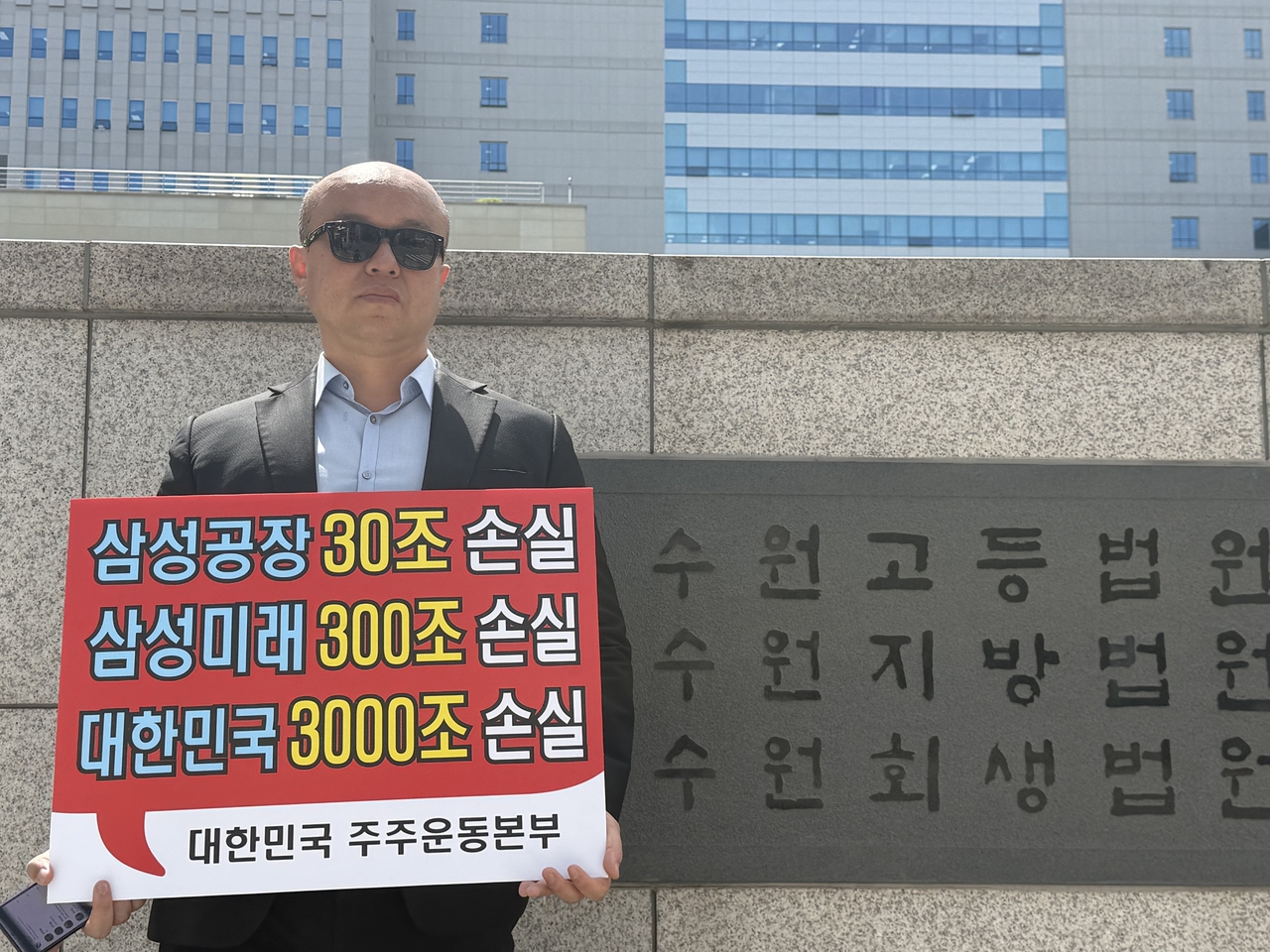
Outside the Suwon District Court in Gyeonggi Province on Wednesday, Min Kyung-kwon, head of the Korea Shareholder Activism Headquarters, staged a powerful one-person protest. Min emphasized to reporters, “Performance belongs not only to management and the union but to shareholders as well,” asserting the stakeholders’ rights in the Samsung dispute.
Min stated that his group would pursue managerial liability against Samsung and consider third-party rights claims against the union if the strike leads to operational disruptions. Following the closed hearing, Hong Ji-na, an attorney representing the union, assured reporters that the union has no intention of occupying facilities and characterized essential strike activities as being misrepresented as an occupation.
Industry analysis from KB Securities estimates that an 18-day Samsung shutdown could reduce global DRAM supply by 3 to 4 percent and NAND flash supply by 2 to 3 percent, given Samsung’s substantial market shares of 36 percent and 32 percent, respectively, highlighting the global semiconductor market implications.
Local media reports, citing industry sources, indicate that several major Big Tech customers have already begun inquiring about supply continuity since the Samsung union’s April 23 rally in Pyeongtaek, Gyeonggi Province, which reportedly drew nearly 40,000 participants, underscoring heightened concern among global clients.
A second crucial court hearing is scheduled for May 13, as stakeholders closely monitor developments in this significant Samsung labor dispute.
mjh


