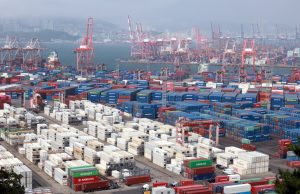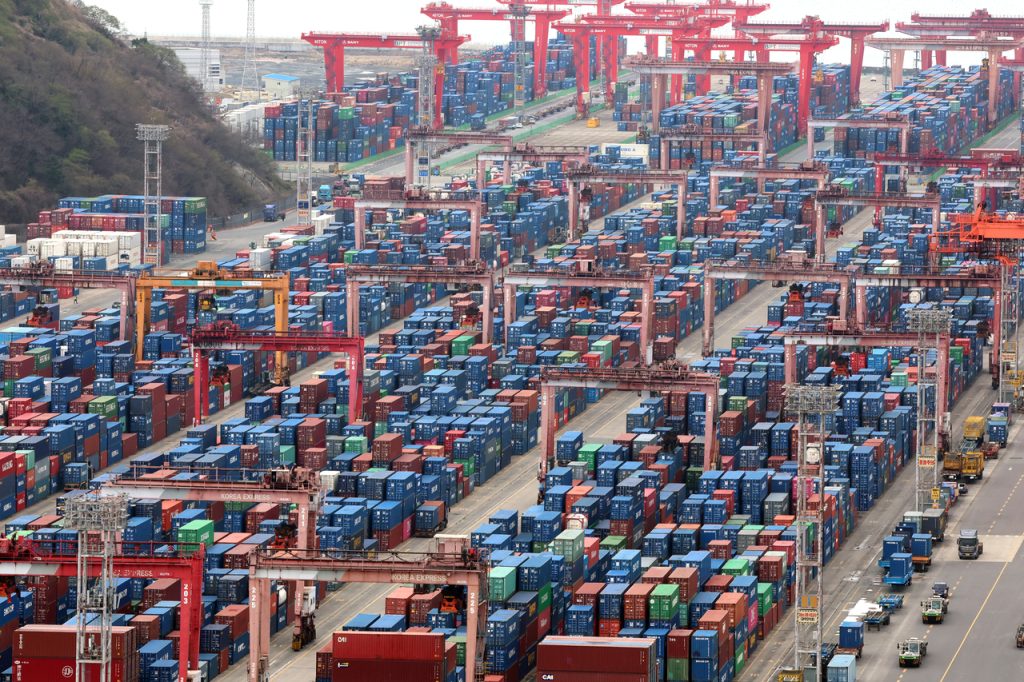
South Korean seaports reported a modest 1.5 percent increase in overall cargo volume during the first quarter compared to the previous year, demonstrating a limited impact from the ongoing Middle Eastern conflict, according to data released Wednesday by the Ministry of Oceans and Fisheries.
Total cargo throughput across South Korea’s nationwide seaports reached 388.45 million tons between January and March, a rise from 382.89 million tons processed in the corresponding period last year. This growth highlights the resilience of the nation’s maritime logistics sector.
A significant portion of this volume comprised export and import cargo, which collectively rose by 1.5 percent year-on-year, reaching 327.48 million tons.
Conversely, container cargo processed at these seaports experienced a slight downturn, decreasing by 1.2 percent year-on-year to 7.87 million twenty-foot equivalent units (TEUs) in Q1. Within this category, export-import container volumes specifically declined by 1.9 percent, totaling 4.21 million TEUs.
An analysis of specific trade routes revealed varying performances for container shipments. Volumes to and from the United States saw a notable 10.2 percent decrease, and Vietnam-bound shipments also fell by 6.98 percent. In contrast, container traffic with China grew by 2.4 percent, while trade with Japan recorded a robust 9.5 percent increase.
Transshipment cargo, defined as freight processed in South Korea en route to other international destinations, also experienced a marginal decrease of 0.7 percent, settling at 3.6 million TEUs, the ministry confirmed.
Looking at individual ports, Busan, a major maritime hub, handled 6.14 million TEUs in the first three months of the year, representing a 2 percent year-on-year decrease. This reduction is primarily linked to the normalization of shipping patterns after a significant surge observed in the first quarter of the previous year, which was influenced by specific US tariff policies.
In positive news for other key ports, Incheon saw its cargo volume rise by 1.1 percent year-on-year, processing 810,000 TEUs. Similarly, the port of Gwangyang reported a robust 5.2 percent increase, reaching 494,000 TEUs in handled cargo.
Finally, non-container cargo across all South Korean seaports demonstrated healthy growth, increasing by 1.7 percent year-on-year to a total of 249.63 million tons during the first quarter.