Naver’s AI Tab Launches Closed Beta: A Strategic Defense Against Google in South Korea’
Naver, South Korea’s dominant search engine, is set to launch a closed beta for its new “AI Tab” as early as next week. This move represents Naver’s most substantial effort yet to counter Google’s aggressive push into the South Korean market with its artificial intelligence capabilities, a rare territory where Google has not yet surpassed the local incumbent.
The timing of Naver’s announcement is particularly significant. Just days after Google rolled out its Gemini AI assistant within Chrome in Korea – embedding it directly into the browser that commands roughly 70 percent of the global market – Naver confirmed its own strategic counter. Hundreds of Naver employees have been internally testing AI Tab since April 17, with a public beta anticipated by late April or early May, according to industry insiders. (A potential image here could show a side-by-side comparison of Naver’s current search page and a mockup of the AI Tab interface).
Naver’s AI Tab: A Dedicated Conversational Search Experience
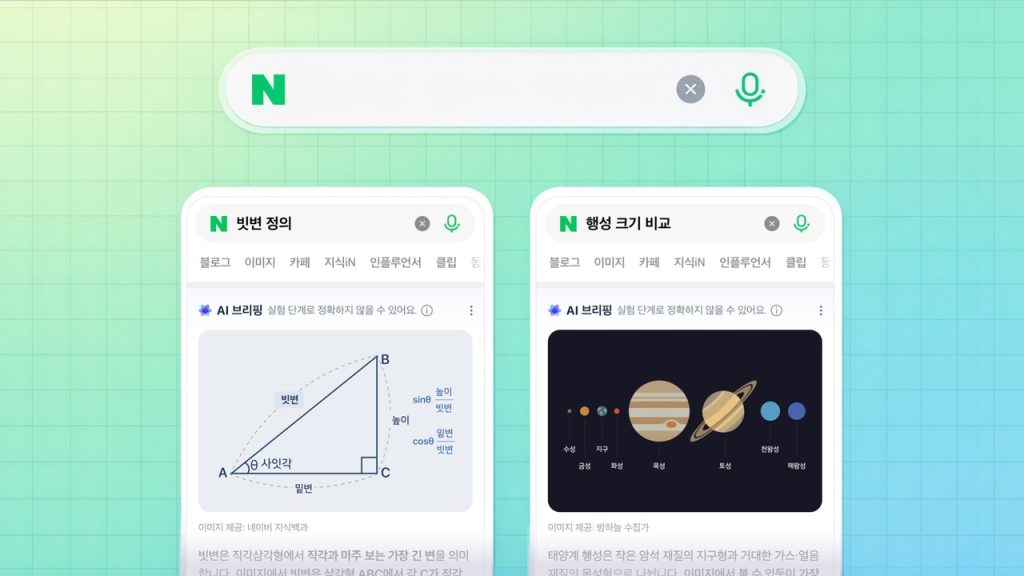
The AI Tab will integrate seamlessly into Naver’s existing search results page, appearing alongside established tabs like News, Blog, and Cafe. This new feature will provide users with a dedicated conversational space within Korea’s most utilized search interface. This marks a distinct evolution from Naver’s year-old “AI Briefing” feature, which primarily offers concise summaries at the very top of search results, often accompanied by relevant images for quick understanding.
Strategic Investment in “AI-Ready” Data and Exclusive Content
Naver is committing over 100 billion won ($67.4 million) through 2028 to cultivate what the industry refers to as “AI-ready” data. This involves training content specifically pre-structured for optimal machine consumption. Unlike AI giants such as OpenAI, Anthropic, and Google, which extensively crawl the open web, Naver is adopting a unique approach: co-producing exclusive material with key partners, including public broadcaster EBS and encyclopedia publisher Doosan.
This innovative strategy directly addresses growing copyright disputes that have plagued other AI firms. By forging these partnerships, Naver effectively locks up premium Korean-language content, creating a valuable data enclosure that competitors cannot readily access. (An infographic or image illustrating Naver’s data co-production model could be highly effective here).
Leveraging Two Decades of Korean User-Generated Content
At the core of Naver’s competitive advantage is this unique data enclosure. Its highly popular Blog, Cafe, Place, and commerce platforms house two decades of rich Korean user-generated content, encompassing everything from restaurant reviews and local business insights to detailed product reviews and travel experiences. Crucially, external AI crawlers are blocked from accessing this vast repository of authentic user data.
The AI Tab is meticulously designed to go beyond simple summaries. It aims to route complex queries to specialized vertical agents capable of executing transactions – for instance, booking a clinic appointment or facilitating product orders. This represents a significant shift towards “execution-oriented agentic AI.”
Early Success of AI Briefing Paves the Way for AI Tab
Naver’s existing AI Briefing feature, launched a year ago, has already demonstrated significant traction, lending credibility to the company’s new AI endeavors. The tool now appears on 20 percent of all search results and reaches an impressive 30 million monthly users, a figure disclosed by the company this month. (A screenshot or graphic showing AI Briefing in action on a Naver search results page would enhance this section).
“AI Tab is positioned as execution-oriented agentic AI that makes judgments based on Korean users’ experience data,” stated Woo Yeon-moon, who spearheads Naver’s AI search initiatives. This highlights Naver’s focus on relevance and utility tailored specifically for its local user base.
The Evolving Search Market Landscape in South Korea
Despite Naver holding a dominant 63.83 percent of the Korean search market in March against Google’s 28.67 percent, according to Internet Trend, Google has made inroads, gaining nearly 10 percentage points over the past decade. Recent Opensurvey data from January revealed a notable acceleration: Gemini’s three-month usage rate in Korea tripled to 28.9 percent between March and December 2025 (projected), marking the fastest market shift ever recorded in the local market. Naver’s AI Tab is a critical strategic response, aiming to solidify its leadership by deeply integrating AI with its unique content and user-centric approach.