SEOUL – South Korean Prime Minister Kim Min-seok announced on Wednesday that the government is undertaking a comprehensive review to determine the future of temporary fuel price caps, a critical measure introduced to mitigate price hikes stemming from the ongoing Middle East conflict. The current intervention, designed to stabilize energy costs, is slated to conclude its term this week.
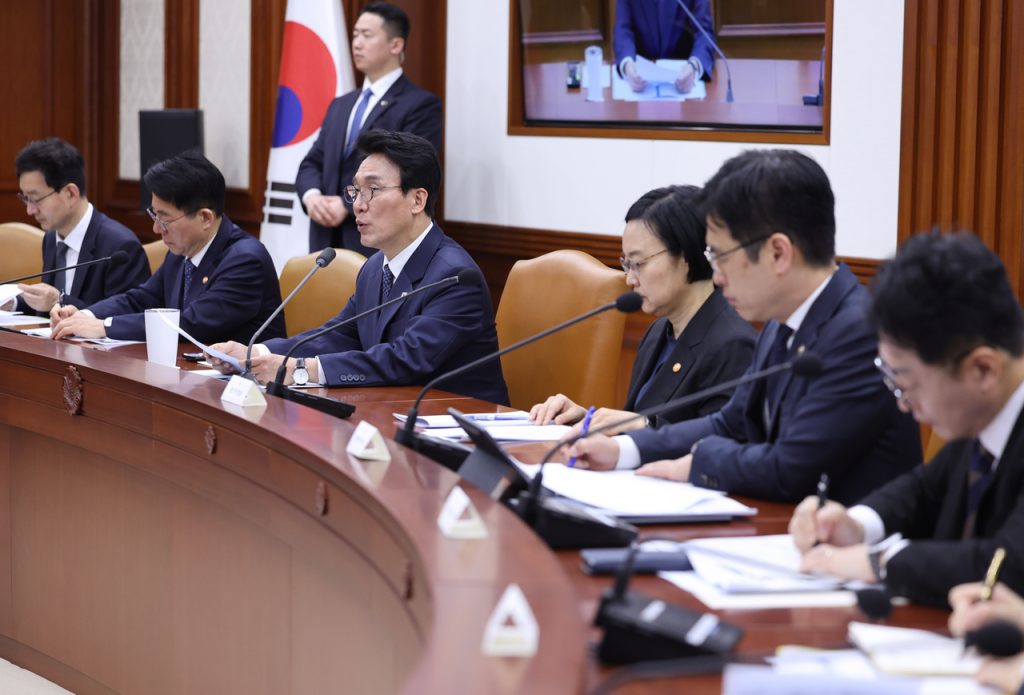
Prime Minister Kim conveyed these remarks during a crucial government meeting convened to assess the broader economic repercussions of the Middle East crisis. With the current fuel price ceiling system scheduled to expire on Thursday, the decision holds significant weight for consumers and various industries across the nation.
Highlighting the system’s impact, Prime Minister Kim stated, “While diverse opinions exist regarding the overall effectiveness of the maximum fuel price system, its implementation has demonstrably yielded positive outcomes. These include the successful prevention of sharp price spikes, a noticeable moderation in the decline of consumer spending, and a crucial reduction in the economic shock experienced by essential sectors like cargo truck drivers and other industries highly sensitive to fluctuating oil prices.”
He further elaborated, “The government’s upcoming decision on whether to implement a fourth round of this critical maximum price system will be made after a thorough and meticulous evaluation, taking into account both the confirmed positive effects and the wide spectrum of diverse opinions from stakeholders.”
The initial introduction of this fuel price cap system in mid-March was a proactive measure by the government. Its primary objective was to effectively mitigate the adverse economic effects stemming from potential supply disruptions and market volatility directly attributable to the escalating Middle East conflict.